
Check out my latest book!
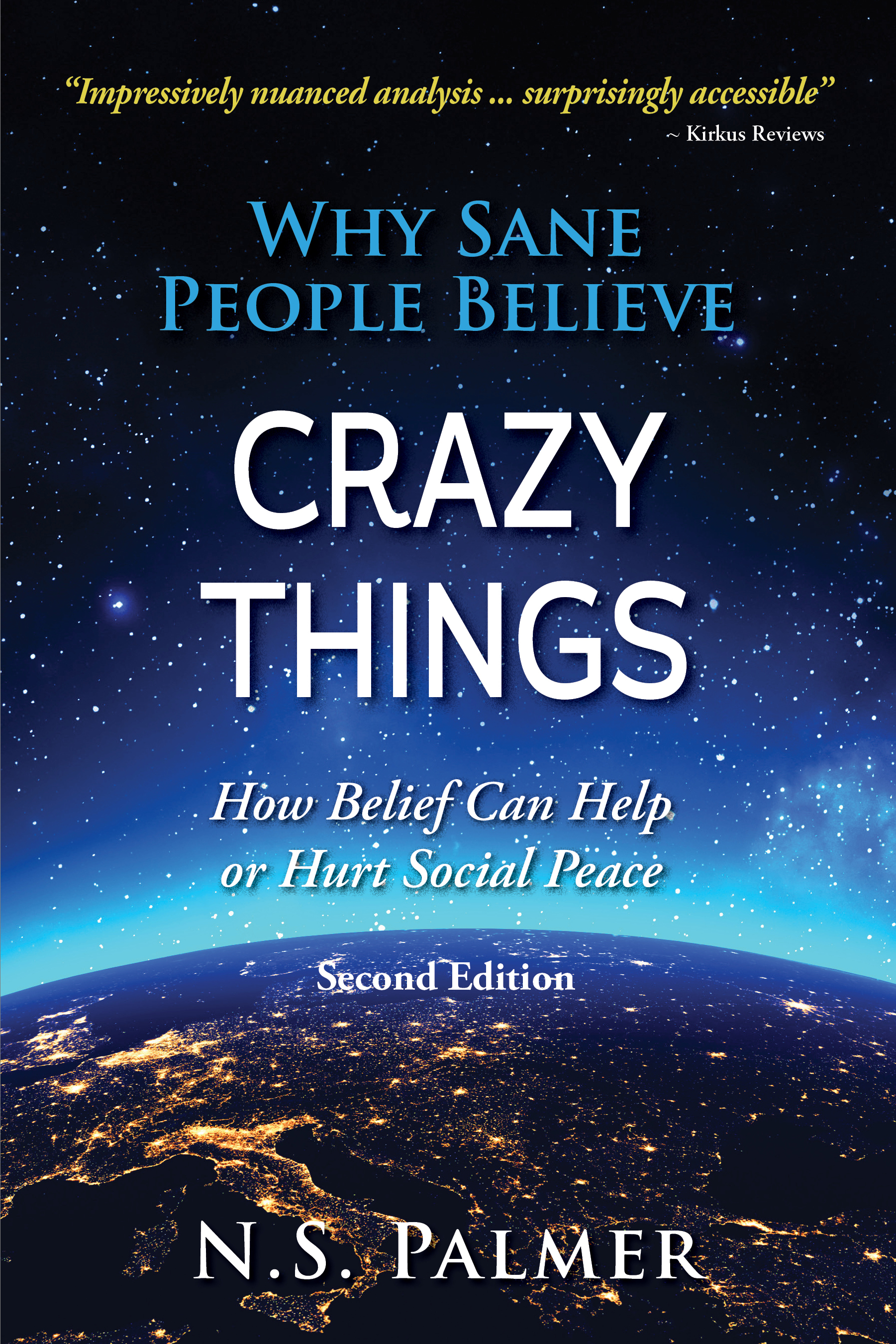
Why I wrote the book (3 mins)

Death & compassion (4 mins)
Three Kraters Podcast (2 hrs)
Posts I Liked
Category Archives: Philosophy
Is Kabbalah Rational After All?
My latest blog post for The Jerusalem Post: “Whereof we cannot speak, about that we must remain silent,”1 advised the Austrian Jewish philosopher Ludwig Wittgenstein. People are never very good at remaining silent. That’s true even for things we can’t … Continue reading
Creation But Not Ex Nihilo
My latest blog post for The Jerusalem Post: How did the world get here? That question didn’t start with the ancient Israelites and it probably won’t end with us. Our scientific attempts to explain the origin of the universe are … Continue reading
How Theism Has Meaning
My latest blog for The Jerusalem Post: In ancient times, Jewish faith and practice were different from what they are today. Most people know that. However, they usually don’t know the details and don’t think about the implications. In the … Continue reading
Moral Patterns and Moral Decisions
My new blog post for The Jerusalem Post: Some things in life are simple. Some aren’t. In fact, a lot of them aren’t. That’s a problem, because we always want things to be simple. And if they aren’t, then we still … Continue reading
Orthodoxy, Truth, and Half-Belief
My new blog post for The Jerusalem Post: People who have a secular worldview often wonder how Orthodox Jews can believe what they do: for example, that the Torah is literally true, that God commanded all the mitzvot, or that the … Continue reading
What Is Faith in God?
What does it mean to have faith in God? It’s not a simple question. Lately, I’ve been wrestling with The Tenacity of Unreasonable Beliefs, a book that tries to analyze religious belief from a psychological perspective. The author, Solomon Schimmel, … Continue reading
Costs, Benefits, and Beliefs
By N.S. Palmer I’m puzzled. No worries. It’s my normal state. I’m revising the draft of my book Belief, Truth, and Torah. I want to make it engage more fully with arguments from one of our professors at Hebrew College, … Continue reading
Seeing Life in Context
As I said the morning prayers today, I realized something: That act sets a context for my whole day. No matter what happens to me today — good, bad, or indifferent — the prayers remind me that it’s not all … Continue reading
Posted in Epistemology, Jewish Philosophy, Judaism, Philosophy
Tagged Astronomy, Faith, Prayer, Science and Religion, Times of Israel
Leave a comment
Who Is Your Enemy?
Who is your enemy? One of my friends said that she must have done something right this year, because she had acquired more enemies. Winston Churchill, who was Britain’s prime minister during World War II, would have agreed: “You have enemies? … Continue reading
In Praise of Sloppy Thinking
By holding the handles, we can manipulate large amounts of information to solve problems, but we avoid getting bogged down in irrelevant details. Even if the underlying details are incomprehensible or inaccurate, the handle can still work. Continue reading


 The Thousand-Year View