
Why I Don’t Hug My Chinese Tutor

As regular readers know, I’ve been studying the Chinese language since last spring.

I had previously taken a semester of Chinese in college, but it utterly defeated me. So I wanted payback. This time, I would beat it.

I was scheduled to take a language proficiency exam in Chicago next week. For obvious reasons, the testing center has postponed all the exams until September.

Right now, of course, everyone is upset with the Chinese. No matter how the Covid-19 pandemic plays out, it probably started in a Chinese city’s “wet market” that sold live bats for people to eat.

Euuw. I like and respect a lot of things about the Chinese, but that’s not one of them.

Whether we like China or not, it’s going to be a player on the world stage. There will be a need for Americans who can speak and read the language. So even though it’s postponed, my revenge for my college humiliation will be productive.

And that gets us to why I don’t hug my Chinese tutor. It has nothing to do with Covid-19.

The first reason is that he’s in Ecuador. He tutors me in online video lessons.

The second reason is that I’m not a hugger. Unless you’re a member of my family or a loved one, no hugs.

But it’s the third reason that shows how the United States (and other countries) should deal with China.

My tutor and I can cooperate because even though our interests are different, they coincide.

He’s proud of his country and he loves its language, so he wants to teach about them. I respect his country and I think its language is important, so I want to learn about them.

We do not discuss politics, about which we would disagree. Our interests there do not coincide.

And whether you love President Trump or hate him, he does seem to understand the principle involved:

The Chinese government and its people care about what’s good for China. They don’t care about what’s good for other countries unless it’s also good for China. Unlike some Americans, they do not see their country as a global charity.

If other countries’ interests coincide with China’s, then the Chinese government will cooperate with them. Both sides will benefit.

If other countries’ interests conflict with China’s, then the Chinese government will try to win the conflict at their expense. Both sides can still benefit, but it’s more difficult.

Other countries have to protect their own interests, because the Chinese won’t do it. And let’s be realistic: it’s not China’s job to prevent other countries from doing stupid things. That’s up to the other countries:

  • It’s stupid for a country to offshore its manufacturing and technological base to an adversary nation.
  • It’s stupid to run huge trade deficits that enable an adversary nation to acquire vast ownership stakes in your country.
  • It’s stupid to allow citizens of an adversary nation to graduate from your universities and then occupy key roles in vital industries and government agencies.
  • It’s stupid to allow politicians and their families to have lucrative business deals with adversary nations.

China is a great country, but it’s not going to hug us and we shouldn’t hug it. We can deal with the Chinese for mutual benefit, but it’s our job to make sure we get what we’re owed. The Chinese won’t do it for us.


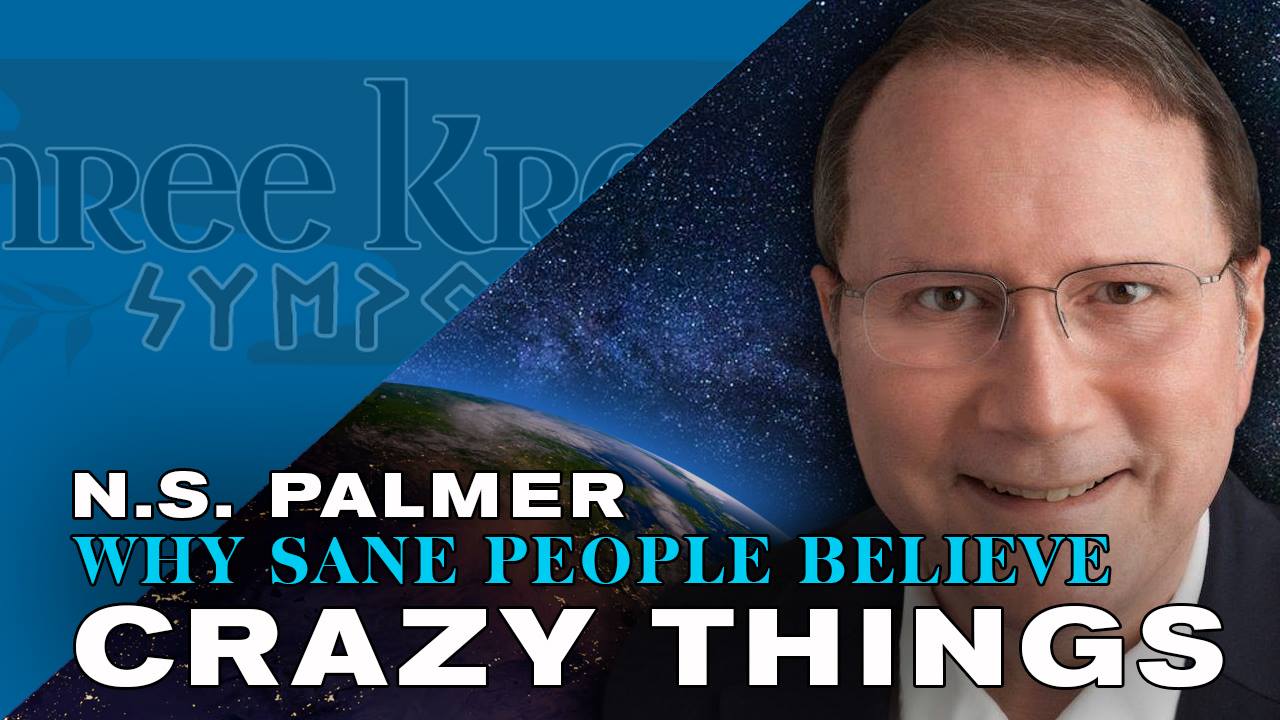
Check out my book Why Sane People Believe Crazy Things: How Belief Can Help or Hurt Social Peace. Kirkus Reviews called it an “impressively nuanced analysis.”
Posted in Life, Political Science, Society | Tagged , , , , , , , , | Leave a comment

The Hidden Cause of Our Disagreement

Note: This blog post explains one cause of society’s basic disagreements. It is not intended to denigrate anyone on either side of the argument. It’s obvious which side I favor, but I’ve done my best to be fair.

There’s a joke about economists. It illustrates a fundamental cause of our moral, social, and political disagreements:

If you show economists that an idea works in practice, then they object: “Yes, but does it work in theory?”

In other words, economists tend to be so fond of their theories that they care more about the theories than about the reality they’re supposed to describe.

Economic models usually assume that people are rational decision-makers who try to get the most material benefit at the least cost.

In other words, “economic people” are more like disembodied minds than flesh-and-blood human beings. They don’t have irrational impulses or group loyalties. They just crunch the numbers and maximize their profit.

But as we’ve heard lately about Covid-19, models are only as good as their assumptions and their data. If those are false or incomplete, then models give us the wrong answers.

That’s why economics is a lot like psychoanalysis: it’s much better at explaining what did happen than at predicting what will happen. Economic models focus on the rational mind but they ignore the rest of human nature. They are incomplete.

Our moral, social, and political disagreements stem partly from the same dichotomy:

  • Is human nature mental or physical? (Does it have to be one or the other?)
  • Are we limitless minds untethered to physical reality, capable of doing or being anything we want?
  • Or are we biological creatures with limited minds, able to do a lot but still limited by physical reality?

If you look past all the slogans, ideologies, and tribal rationalizations, that’s the basic difference between our two ways of seeing the world.

What caused the difference?

Psychologist Abraham Maslow defined a “hierarchy of needs” that human beings must satisfy (see the graphic).

At the bottom are things that we need in order to survive: food, safety, belonging, and position in the social order. Those are essential. If we don’t get those things, then we can’t live at all. Higher needs never become an issue.

At the top are things that we need in order to fulfill our human potential: to understand the world, to appreciate beauty, to exercise our abilities, and to perceive the majesty of creation. It’s here that our imagination seems able to break free of the bonds of reality.

Throughout history, human life has been a struggle to survive. In many parts of the world, it still is. People didn’t have enough to eat. They were ravaged by diseases far worse than Covid-19. Families had a lot of children because so few of the children lived to adulthood. As much as they could, people had to base their worldview on facts, not on aspirations. In order to have any chance of survival, they had to deal with the world as it was, not as they wished it to be.

But now, in prosperous countries, that’s less true. Most people never go hungry. If they’re sick, they can take a pill and usually get better. They’re almost never in physical danger. All their lives, they never lacked any essential needs of survival, so they take them for granted. They don’t even notice them. So at a gut level, they don’t quite believe that physical reality is important.

On the other hand, common sense is based on millennia of human history. It knows we can achieve great heights of spirituality. But it also knows that we must be alive to do it — in other words, essential needs come first. Satisfying those needs requires accepting reality as it is. Our wishes and aspirations must be consistent with it. We can’t ignore the bottom part of the pyramid.

Common sense is the worldview of ordinary people. They think that a man in a dress is a man in a dress. A blonde WASP isn’t an American Indian. And a software engineer isn’t a dragon: if he thinks that he is, then he’s mentally ill.

The only people who believe otherwise are those who have never had to worry about physical reality. Well paid, well protected, they live in a world of ideas and imagination: their own personal “Twilight Zone.”

Never hungry, never seriously ill, never in actual danger, they focus only on wishes and aspirations. And why wouldn’t they? They’ve never lost anything by doing it. If anyone says things they don’t like, the offender can be de-platformed and silenced. If someone thinks he’s a dragon, then who are they to say he’s not?

Both sides are right, and both are wrong. Yes, we are more than just physical beings. Our minds and creativity can soar beyond the clouds. But that doesn’t mean we’re just mental beings who can create reality on the fly to suit our whims. As individuals and societies, we need to respect both sides of our nature. If we don’t, we risk smashing Maslow’s pyramid into a pile of rubble.


Check out my book Why Sane People Believe Crazy Things: How Belief Can Help or Hurt Social Peace. Kirkus Reviews called it an “impressively nuanced analysis.”
Posted in Human Relations, Philosophy, Political Science, Psychology, Science | Tagged , , , , , , , | Leave a comment

The Plural of Anecdote is Data

It’s said that the plural of “anecdote” is “data,” so here’s some data in anecdote-sized packages.

My family has so far been spared any cases of Covid-19, thank Goodness.

However, a friend of mine got it and is now recovering after a long week. He says it was brutal. One day he’d feel better, and the next day he’d feel sick again. At least now, he’s definitely on the mend.

Here in the Midwestern United States, we have fewer cases than in the coastal hot zones. By the time it started to spread here, we’d already had ample warning and were starting to play it safe. Even so, we’re getting our share. Like both my parents, two of my brothers are MDs so they’re good sources of advice and information.

Medical professionals deal with illness and death more than most of us do, and they’re not inhuman robots. They have feelings. They need to distance themselves emotionally or it would tear them apart. My father referred to infectious diseases as “the Dread Mahoot.” He also had a sunny disposition that probably helped. My biological mother’s disposition was all over the place, but she was a psychiatrist and seldom treated physical maladies.

I recall that when I was three or four years old, my parents wanted to vaccinate me against the usual things. I didn’t like getting shots, so I hid under their bed. I was small enough to fit underneath it, but they weren’t, so they had to talk me out. These days, if there were a Covid-19 vaccine, I’d eagerly sign up for it.

I got one of my Ph.D.s in Los Angeles and had a postdoctoral fellowship up in Santa Barbara, so I checked to see how my old haunts were faring. Westwood and Studio City have 26 and 19 cases; Culver City has 17. Farther out, Calabasas has 13. Goleta and Isla Vista (UC Santa Barbara) together have four cases. But California is locked down tight, so the rate of new cases should drop.

We’ll all get through this. Then we can get back to screaming at each other about trivial bullsh-t that no sane person would take seriously. Or maybe we’ll recover our senses. It could happen.


Check out my book Why Sane People Believe Crazy Things: How Belief Can Help or Hurt Social Peace. Kirkus Reviews called it an “impressively nuanced analysis.”
Posted in Human Relations, Judaism, Psychology | Tagged , , , , , , | Leave a comment

If We Can Learn, We Can Do Better

The world is scary right now. But it won’t stay that way. Things will get better.

The pandemic will subside. We will mourn our dead, be they many or few. We will go on.

But if we can learn, then even from tragedy, some good can come.

We’ve been given a great privilege, even though it’s not one we wanted. The pandemic has shown us our own graves, both as individuals and as societies.

It’s given us a chance to re-assess. To get our priorities straight. To take a second look at how we live:

  • Do we think that in our final moments, each of us will say “I wish I hadn’t spent so much time with my family and loved ones”?
  • Do we think it’s rational to get violently angry whenever someone we don’t know says something we don’t like?
  • Do we think it’s our right to dictate to everyone else how to live? How to talk? What to believe? Are we that infallible?
  • Do we want to play politics with every single aspect of life? Can’t we just leave some things alone?
  • Do we want to define ourselves by how much we hate people who disagree with us?
  • Do we want to turn what were relatively peaceful, orderly societies into miserable, Hobbesian wars of all against all?
  • Do we want to be caught by surprise again, the next time some nasty virus jumps out of the woodwork?

We should ask ourselves those questions. The answers will shape our future.


Check out my book Why Sane People Believe Crazy Things: How Belief Can Help or Hurt Social Peace. Kirkus Reviews called it an “impressively nuanced analysis.”

Posted in Jewish Philosophy, Life, Society | Tagged , , , , , , , , , , , | Leave a comment

Einstein Agrees with the Lone Ranger

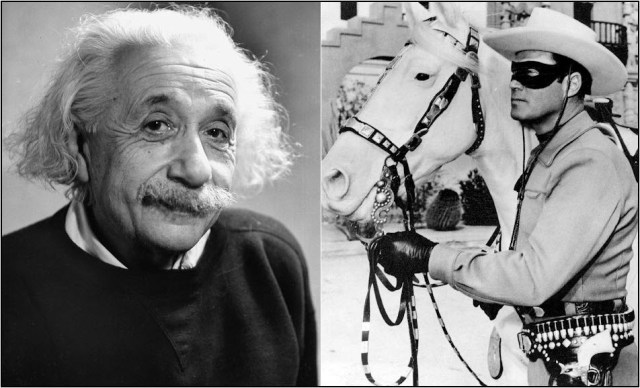
Albert Einstein and the Lone Ranger agree: Get over yourself.

Albert Einstein was one of the smartest people of the 20th century. His ideas revolutionized our understanding of space and time. They also contributed to the development of quantum mechanics.

The Lone Ranger was a fictional hero of radio and television shows from the 1930s to the 1950s. The episodes always featured strong moral messages about honesty, courage, forgiveness, and second chances. “Nowhere in the pages of history can one find a greater champion of justice,” said the narrator in the show’s opening credits.

When Albert Einstein and the Lone Ranger agree on something, it’s worth paying attention.

Einstein’s version is more easily quotable. In his 1934 book Mein Weltbild (published in English with the title The World As I See It), he wrote that:

“The true value of a human being is determined primarily by the measure and the sense in which he has attained liberation from the self.”

The Story of Sam Bass

The Lone Ranger’s version comes at the end of the show’s April 24, 1944 radio episode, so it requires context.

The episode was “The Story of Sam Bass.” In the opening scene, Sam’s wife is killed in a crossfire between the sheriff and an outlaw gang that just robbed the bank. Sam leaves his infant son Johnny with the boy’s grandparents. He embarks on a quest for revenge against Jim Murphy, the gang’s leader.

Years later, Sam has become a notorious outlaw himself but is finally closing in on Murphy’s gang. Also closing in are the Lone Ranger and his Indian companion Tonto. They’re tracking down the gang because Murphy killed a U.S. Marshal.

Posing as a criminal, the Lone Ranger meets Sam. He reveals that Sam’s grown-up son Johnny has become sheriff of the town that Murphy’s gang plans to rob next. He says that Johnny refuses to believe his father is an outlaw.

Just as the gang emerges from the town bank, Sam shows up, guns blazing. Though shot many times, he kills all of the outlaws before slumping to the ground. He saves his son’s life and the lives of several other people. A little later:

“Doc says there ain’t much hope for him, sheriff.”

“Yeah, I know. I wish that I knew his name.”

“Ain’t no mystery about that. It’s the same as yours. That’s Sam Bass, the outlaw.”

“But that’s my father’s name, and he’s not an outlaw.”

Sam wakes up, speaks to Johnny for a moment, and then dies.

“He’s gone, sheriff. But he went down fighting. You’ve got to admire an hombre like that, even if he was an outlaw.”

“You’re crazy. This is my father and he wasn’t an outlaw. Wait, I’ll bet there’s something in his pockets to prove he wasn’t.”

Johnny searches his father’s pockets. “Here. Look at this: a badge. A United States Marshal’s badge. That’s what Dad must have been doing.”

“Hey, sheriff. What’s on that piece of paper? That was in his pocket, too.”

“I don’t know. It looks like a note.”

“What does it say?”

“‘A man’s true worth is measured by what he does for someone else.’ And it’s signed, ‘The Lone Ranger’.”

The Bottom Line

Albert Einstein and the Lone Ranger agree:

Don’t worry about how you die. Worry about how you live.

P.S. A Real-Life Example

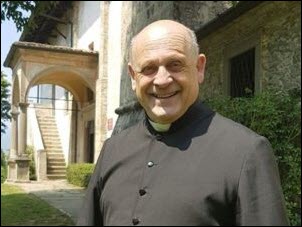
A Catholic priest in Italy not only talked the talk, he walked the walk. Few people would have had his courage and integrity. The UK Independent reported:

“A 72-year-old priest who gave his respirator to a younger Covid-19 patient he did not know has died from coronavirus. Father Giuseppe Berardelli, the main priest in the town of Casnigo, refused a respirator which had been bought for him by his parishioners and instead gave it to a younger patient.

He died last week in Lovere, Bergamo – one of the worst-hit cities in Italy’s ongoing coronavirus crisis.

“He was a simple, straightforward person, with a great kindness and helpfulness towards everyone, believers and non-believers,” Giuseppe Imberti, the mayor of Casnigo, said in a statement, according to the Italian news website Araberara.

Although there was no funeral for the priest, residents of the town reportedly applauded from their balconies as his coffin was taken for burial.”


Check out my book Why Sane People Believe Crazy Things: How Belief Can Help or Hurt Social Peace. Kirkus Reviews called it an “impressively nuanced analysis.”
Posted in Life, Philosophy | Tagged , , , , , | Leave a comment

Show Up for the Future

The future belongs to the people who show up for it.

It’s as simple as that.

I can’t tell you what will happen with the Covid-19 virus. But I can tell you that fear is at least as deadly as the virus.

Unless you’re behaving stupidly, you probably won’t get Covid-19. Unless you’re in a high-risk group (over 70, smoker, etc.), you’ll almost certainly be fine even if you do get it. You might get it and never even know that you had it. Even if you’re in a high-risk group, the odds are a little worse but they’re still in your favor.

Most of the problems we’re seeing right now aren’t caused by the virus. They’re caused by fear.

What does the future hold? We don’t know. But that was also true last year, and the year before that. We weren’t afraid then. Why should we be afraid now?

It’s relevant, so let me tell you how I got a varsity letter as a high-school cross-country runner.

I wasn’t very athletic and was about 40 pounds overweight at the start of the cross-country season. The only reason I was even on the team was that my school required all students to participate in sports. I had to sign up for something, and cross-country was the only sport that didn’t require calisthenics, which I hate.

On the first day of practice, I set a new record for the longest it had ever taken anyone to run the cross-country course. As far as I know, my record still stands today.

After my humiliating first run, I started what I called my “coffee diet.” The theory was simple: drink two cups of coffee with every meal, and don’t eat anything. In reality, I did eat a few hamburgers, so it was more like a low-carb diet.

The pounds fell off. By the end of the season, I was slim, fit, and still a lousy runner. In races, I always came in last.

But I got a varsity letter. Why? Because I always showed up, and I always finished. I worked so hard and improved so much that my letter should have been an “A for Effort.”

The future is the same way. If you give up, then you’re done. The future will be made by people who keep on running even if they don’t feel like it. They won’t quit.

So don’t give up. Show up.


Check out my book Why Sane People Believe Crazy Things: How Belief Can Help or Hurt Social Peace. Kirkus Reviews called it an “impressively nuanced analysis.”
Posted in Life | Tagged , , , , , , , | 2 Comments

The Weather Report on Coronavirus

A lot of media people are sounding the alarm about a new strain of coronavirus, a pneumonia-like illness. They’re warning everyone to stock up on groceries, buy face masks, and avoid going outside.

To me, it seems like an over-reaction.

For sure, the new coronavirus is worse than the flu, but the flu also kills some people. And you’re a lot more likely to get the flu.

I can’t tell you what’s in the future. But I can tell you how televised weather forecasts are relevant to coronavirus reporting.

Did you ever wonder why storm forecasts are often wrong? Either the storm isn’t as bad as predicted, or it doesn’t happen at all.

The answer is obvious when you consider the options for a weather forecaster:

  • If you predict good weather and the weather is good, then nobody thanks you.
  • If you predict good weather and the weather is bad, then everyone is angry at you. You were wrong, and they got caught in a storm.
  • If you predict bad weather and the weather is bad, then nobody thanks you.
  • If you predict bad weather and the weather is good, then everyone is relieved and nobody complains that you were wrong.

The same logic applies to coronavirus reporting:

  • If you predict that everything will be fine and it is, then nobody thanks you.
  • If you predict that everything will be fine and it’s not, then everyone wants your head on a plate.
  • If you predict that everyone’s gonna die and they do, then nobody thanks you. There won’t be anyone left to do it.
  • If you predict that everyone’s gonna die and they don’t, then everyone is relieved and nobody complains that you were wrong.

For your personal self-interest, gloom-and-doom predictions are safer than realistic ones. So your incentive is to err on the side of alarmism.

Everyone will almost certainly die someday, of something. It probably won’t be coronavirus.

As for me, I’d choose to be shot by a jealous husband. A guy can dream.

Que sera, sera.

Posted in Life, Psychology, Science, Society | Tagged , , , , | 2 Comments

Language Does Not Equal Reality

Every Saturday, my friend Jim Grey publishes a “recommended reading” list of interesting blogs from the previous week.

Today’s list linked to an article about the benefits of speaking multiple languages. Jim explained:

“I used to speak German very well. For years there were concepts that I felt I understood more deeply because I could articulate them in German. The language gave me nuance that English lacked for those concepts. My skill in the language has waned from disuse, and with it went those enhanced understandings.”

I think he got it exactly right. Different languages don’t change the facts, but they do change the nuances, such as:

  • Focus and viewpoint
  • Emotional associations of words and phrases
  • Cultural references that native speakers recognize
  • Sound, rhythm, and euphony

The nuances can be important. British writer Daniel Hannan, who served in the European Parliament from 1999-2016, observed that:

“Working in that multilingual environment [the European Parliament] has convinced me that there are intrinsic properties in English that favor the expression of empirical, down-to-earth, practical ideas.

I often listen to the interpretation with my headphones covering one ear, so as to improve my language skills. Frequently, a politician or official will say something that seems to make sense enough in his own tongue but that, when rendered into English, turns out to be so abstract as to be almost meaningless.”

He adds:

“Plenty of academic papers in English are now written in unintelligible [gibberish], the authors evidently confusing opacity of expression with profundity of thought. But such authors generally also look to statist European thinkers when it comes to their view of how to organize society, which rather proves [the] point.”

Nuances change, but the facts stay the same no matter how we talk about them. For example, the Chinese language has some surprises for Western speakers:

  • Chinese nouns have no singular or plural forms.
  • In spoken Chinese, the same word can mean “he,” “she,” or “it.”
  • Chinese verbs have no tenses, such as past, present, or future.

Even so, Chinese people still have to distinguish between singular and plural, male and female, past, present, and future. They just do it in different ways.

The practical reality is the same, but there are inevitably minor differences in how they see it and feel about it. In a few situations, it probably affects how they act.

(P.S. In a couple of months, I’m taking the Chinese language proficiency exam: the Hànyǔ Shuǐpíng Kǎoshì. Wish me luck, which in Chinese is zhù nǐ hǎo yùn. I’ll need it.)

Posted in Epistemology, Philosophy, Psychology | Tagged , , , , , , | 4 Comments

Somehow, We’ve Survived

For a couple thousand years, people have been trying to prove that God exists.

None of those proofs are much good. They can only convince people who already want to believe in their conclusion.

But maybe the best proof of God’s existence is hiding in plain sight: We’re still here. The human race hasn’t destroyed itself yet.

I say that not in sarcasm, but in a genuine sense of optimism and hope.

We tend to think that the lunatic beliefs of our own era are uniquely bad, but they’re not. People have always been crazy. The only changes are how they’re crazy, how crazy they are, and how much damage they do before their insanity burns itself out.

Until the 1970s or so, you could get fired for showing disrespect to the American flag or for being gay. Now, you can get fired for showing respect to the American flag or disapproving of gays. Until 10 years ago, nobody outside of a mental institution believed that a man could become a woman just by putting on a dress and calling himself “Loretta.” Now, it’s a sacred dogma that’s dangerous to question. In another 50 years, all those beliefs will probably reverse themselves again.

Back in 1903, Yale University sociologist William Graham Sumner observed that:

“The motives from which [people] act have nothing at all to do with the consequences of their actions. Where will you find in history a case of a great purpose adopted by a great society, carried through to the intended result, and then followed by the expected consequences in the way of social advantage? You can find no such thing.”

Humanity keeps blundering from one nutty obsession to the next, and yet we’re still here.

Thank God. I think.

Posted in Life, Political Science, Psychology, Society | Tagged , , , , , , | 2 Comments

A Science Experiment About Life

Science is basically about observing the world and trying to deduce its fundamental laws.

It can get a little more complicated, but that’s the essential method.

So let’s try a science experiment about life. It’s easy, it’s informative, and you can do it in a few seconds.

Hold your hand at eye level and extend your arm as far away from your face as you can. Look at your hand.

Now, bring your hand closer to your face, six inches from your eyes. Look at your hand.

You’ve now made two observations. Between the first observation and the second, you changed only one variable: the distance between your eyes and your hand.

What happened?

Your hand seemed to get bigger.

Sure, as an adult, you know that it didn’t really get bigger. But it did look bigger. It took up a larger portion of your visual field.

Based on the experiment, we can deduce a simple but surprisingly far-reaching conclusion:

When things are closer to us, they seem bigger.

And that leads to an important truth about life:

Very few things are as good or as bad as they seem at the time they occur.

Maybe you’re worried about the state of society or the state of the world.

But remember our experiment. The scary things are close to you in time. They’re happening now.

As a result, they tend to look bigger and scarier than they really are.

Yes, some of them actually are bad, but we often overestimate their significance.

Face life with courage. And trust in the fundamental goodness of the universe. It will work out as it should.

Posted in Life, Psychology | Tagged , , , , , , | 2 Comments