How Medieval Islam Influenced Modern Judaism

My latest blog post for The Jerusalem Post:

In the modern era, we associate Islam mainly with terrorism, barbarism, and opposition to science. But it was not always so. Long ago, our early encounters with Islam influenced the development of modern Judaism.

Truth to tell, I don’t know why Medieval Islamic civilization fell apart and became the house of horrors that it is now. Some people study it. I hope they don’t see the same things happening in our civilization.

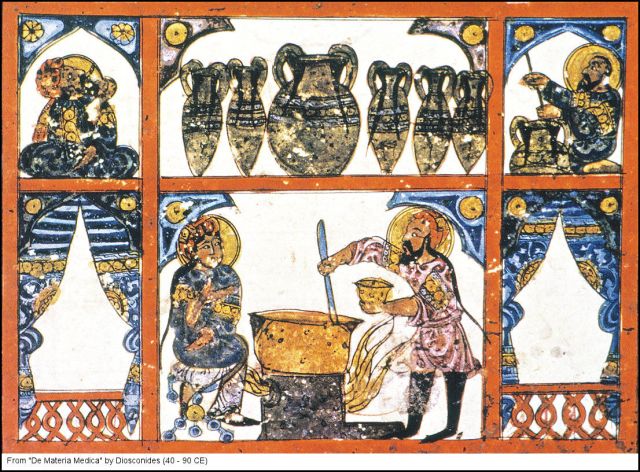
Around 762 CE, Baghdad became an important intellectual center as Islamic scholars translated ancient Greek works of philosophy, science, and mathematics into Arabic. They wanted to learn “falsafa” (philosophy) so that they could argue effectively against Jews and Christians. They translated and discussed the available works of Aristotle and Plato, as well as Euclid (mathematics), Archimedes (mathematics and science), Galen (medicine), and Ptolemy (astronomy).1

Based on what they learned from the Greeks, Islamic sages published religious apologetics that were called “Kalam” (speech). Jewish thinkers were influenced by Kalam’s methods of argument, as well as by its assumption that Divine revelation must be entirely compatible with reason and science.

Our sages’ response to Kalam changed what many Jews thought it meant to be Jewish.

Prior to our confrontation with Islamic Kalam, our ancestors conceived of Judaism simply as trust in God. With the exception of the Hellenistic Jewish philosopher Philo (25 BCE – 50 CE), they didn’t give much thought to metaphysical questions, such as God’s nature. Nor were they terribly interested in epistemological questions, such as how they reached and validated their beliefs. Menachem Kellner writes that, historically:

“Loyalty to God, Torah, and Israel, therefore, is the hallmark of the Jew: loyal behaviour, not systematic theology, is what is expected and demanded.”2

Islamic Kalam changed that. No longer could Jews live by a simple faith without thinking much beyond what it required of them. Now, they had to answer arguments and define terms. They had to ask, “What do I mean by ‘God’? How do I know that the Torah and the rabbis are correct?” As Kellner remarks:

”With the rise of Islam from without and of Karaism from within, Judaism was confronted by challengers that it could not ignore. Islam was an aggressively proselytizing religion, and Karaism denied the Jewish legitimacy of Rabbanite Judaism.”3

Based on Greek philosophy, on Aristotle in particular, Kalam texts all have pretty much the same structure:

“[They] … follow a set pattern of discussion, which starts from universal issues (epistemology, the creation of the world, God’s unity and justice) to issues that are more narrowly tied to the specific religion of the author.”4

It’s worth comparing that description to the structure of Saadia Gaon’s (882-942 CE) Book of Beliefs and Opinions, which gave a Jewish response to Islamic Kalam:

  • Chapter 1: Concerning the belief that all existing things have been created
  • Chapter 2: Concerning the belief that the Creator is one
  • Chapter 3: Concerning command and prohibition
  • Chapter 4: Concerning obedience and rebellion
  • Chapter 5: Concerning merits and demerits
  • Chapter 6: Concerning the soul and death
  • Chapter 7: Concerning the resurrection of the dead
  • Chapter 8: Concerning the redemption
  • Chapter 9: Concerning proper conduct in this world

Just like Islamic Kalam, Saadia’s book starts at a universal level, then progressively drills down to more specific issues of Jewish religious faith and morals. Saadia’s work also shares many stylistic features with Islamic Kalam, such as dialectical arguments (“As for those who assert …, to them I say …”).

As a result, Jewish Kalam texts, such as those by Saadia, are “so closely akin to Muslim kalam that, at first sight, only the prooftexts appear to be different.”5

However, Kalam’s influence was more than methodological and stylistic. Yoram Hazony’s book The Philosophy of Hebrew Scripture shows that the Torah contains epistemology, but only of a primitive kind, such as “look at evidence.” Now, for the first time, Jewish thinkers were challenged to examine the basis of their knowledge and beliefs. Their answers corresponded almost exactly to the Islamic answers: sense perception, reason, and “authentic tradition.” That was no surprise, because they based their non-Jewish philosophical ideas on the same Greek philosophers as the Muslim thinkers did.

Grounding belief on empiricism and logic was not a content-neutral change. Instead of simply accepting ideas because the Torah or the rabbis said so, Jewish thinkers were forced to ask how they could square their beliefs about religion with their beliefs about knowledge, logic, and metaphysics.

That process led them to a new view of Judaism. It was no longer simply our people’s way of life. Instead, it became a set of more-or-less provable beliefs. Thus was born Jewish systematic theology and, Kellner laments, a certain amount of dogma.

Maimonides (1135 – 1204 CE) put the matter starkly in Chapter 13 of the Mishneh Torah:

””He who repudiates the Oral Law is … classed with the epicureans (whom any person has a right to put to death). As soon as it is made public that he has repudiated the Oral Law, he is cast into the pit and is not rescued from it, he is placed on a par with heretics, epicureans, those who deny the divine origin of Scripture, informers, and apostates — all of whom are ruled out of the community of Israel.”6

Works Cited

Frank, D. and Leaman, O. (2003), The Cambridge Companion to Medieval Jewish Philosophy. Cambridge: Cambridge University Press.

Hazony, Y. (2012), The Philosophy of Hebrew Scripture. Cambridge: Cambridge University Press. Kindle edition.

Kellner, M. (2006), Must a Jew Believe Anything? Portland: Littman Library of Jewish Civilization.

McGinnis, J. and Reisman, D., editors (2007), Classical Arabic Philosophy: An Anthology of Sources. Indianapolis: Hackett Publishing Company. Kindle edition.

Rosenblatt, S., translator (1948), Saadia Gaon: The Book of Beliefs and Opinions. New Haven: Yale University Press.

Twersky, I. (1972), A Maimonides Reader. Springfield: Behrman House. Kindle edition.
Footnotes


  1. McGinnis, J. and Reisman, D. (2007), loc. 107. 
  2. Kellner, M. (2006), p. 18. 
  3. Ibid, p. 49. 
  4. Frank, D. and Leaman, O. (2003), p. 68. 
  5. Ibid, p. 71. 
  6. Twersky, I. (1972), loc. 2733. 
Posted in Bible, Epistemology, Jewish Philosophy, Modern Orthodoxy, Philosophy, The Jerusalem Post | Tagged , , , , , , , , , , | Leave a comment

Knowing What Time It Is

Time-MM-Sinai

My latest blog post for The Jerusalem Post:

Do you know what time it is?

If I asked you that question, there are two logical answers and many non-logical answers.

If you know what time it is, then the logical answer to my question is “Yes.” If you don’t know, then the logical answer is “No.”

But you’re not likely to say that. You’ll probably say something like, “It’s three o’clock” or “It’s time for dinner.” If you’re a pessimist, you might say “It’s later than you think.”

None of those answers is a logically correct response to my question. I didn’t ask what time it was. I asked if you knew what time it was.1

Why did you give a non-logical answer? It’s simple: Because you knew that the real meaning and purpose of my question did not match the words I used.

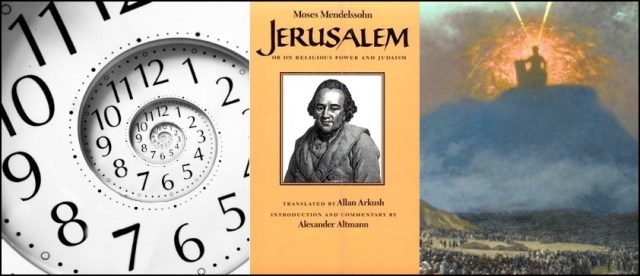
And that leads us, first, back to Jewish philosopher Moses Mendelssohn (1729-1786); and then even further back to our encounter at Sinai with The Holy One, Blessed Be He.

The Jewish Socrates of Berlin

Mendelssohn was part of two different intellectual worlds. As part of the German Enlightenment, he was known as “the Socrates of Berlin.” An elegant writer in German, he embraced the secular rationalism, philosophy, and science of his time. But he was also a faithful and observant Jew. In Hebrew, he wrote about Jewish beliefs, philosophy, and history — signing those works as Moses Dessau instead of the name by which he was famous in non-Jewish society.

Sooner or later, those two worlds were bound to collide. When they did, Mendelssohn managed to extricate himself — but at a cost. The 20th-century philosopher Franz Rosenzweig remarked:

“From Mendelssohn on, the Jewishness of every individual has squirmed on the needle point of a ‘Why?’” 2

The worst collision came in 1782.3 In his preface to the German translation of the 1656 book Vindiciae Judaeorum (Vindication of the Jews) by Rabbi Menasseh Ben-Israel, Mendelssohn denied that Jewish religious authorities had a right to excommunicate dissidents from Judaism. He based his conclusion on Enlightenment ideas about freedom of thought. However, that also contradicted traditional Jewish belief.

A German writer named August Cranz believed that Christianity was rational and compatible with religious freedom, but that Judaism was not. In an essay titled “The Search for Light and Right,” he said that Mendelssohn had already rejected one Jewish belief. He challenged him to reject the rest of Judaism and convert to Christianity. To make matters worse, a postscript accused Mendelssohn of being a secret Deist who didn’t believe in revelation at all.4

Mendelssohn was in a terrible predicament. True, he was an Enlightenment rationalist. He was a respected German intellectual. But he was also a faithful Jew, loyal to the Jewish community and concerned about its welfare. He didn’t want to argue with Cranz because it might be taken as an attack on Christianity, which history showed was a dangerous thing to do. But neither would he deny his Jewish faith and harm the Jewish people by doing so. What could he do?

He made a bold and unexpected move. He denied that Judaism had any required beliefs at all, so there were no such beliefs for him to reject:

”Judaism knows of no revealed religion in the sense in which Christians understand this term. The Israelites possess a Divine legislation — laws, commandments … but no doctrinal opinions, no saving truths, no universal propositions of reason. These the Eternal reveals to us and to all other men, at all times, through nature and thing, but never through word and script.”5

A couple of points are obvious. First, Mendelssohn’s reply is artful misdirection. It’s true that Judaism has Divine commandments, but it makes no sense to follow them unless one believes that God issued them. Belief in God is required, as well as belief that the rabbis transcribed and transmitted them correctly over the centuries.

Second, Mendelssohn cleverly blurs the distinction between revealed truths of religion and the demonstrable truths of science and philosophy: only the latter are “revealed to us and all other men, at all times.”

Mendelssohn’s Three Errors

As an 18th-century rationalist, Mendelssohn knew that much of traditional Jewish belief was inconsistent with modern science and philosophy. But he also knew that it served a purpose. It helped preserve the Jewish community, promote moral behavior, and foster social harmony. Earlier, in dodging a previous argument about Christian beliefs, he had written:

”Whoever cares more for the welfare of mankind than for his own renown will keep a rein on his opinions concerning [beliefs that are incorrect but socially beneficial] … he will guard against attacking them forthrightly.”6

Three errors led to Mendelssohn’s denial that Judaism required any beliefs.

First, he thought of beliefs only as mental and as asserting things — not as performing many other, public functions that are sometimes more important than what the beliefs seem to assert.

Second, he assumed that the meaning of beliefs had to match the words used for them: as we saw with our question about time, that is not true.

Third, he assumed there was only one frame of reference for validating beliefs: the frame of secular science and philosophy. That frame of reference applies to beliefs making claims about the world of science and philosophy, but not necessarily to other types of beliefs.

Correcting Errors, Safeguarding Truth

Mendelssohn did not seem to ask: Is “God chose the Jewish people at Sinai” a different kind of belief than “Dogs are mammals” or “Ten divided by five equals two”? Those beliefs are validated and true by reference to biology and arithmetic. They make specific claims about the world. They refer only to things that exist in our ordinary experience.

However, “God chose the Jewish people at Sinai” is a radically different kind of belief. It starts by referring to a Being Who transcends our world, our experience, and our understanding. In terms of our normal world, the belief is not false: it is logically meaningless if one takes it literally and as corresponding to the words used.

The second part (“ … the Jewish people at Sinai”) implies that certain things happened at a certain place and time, but according to secular archaeology, those things probably did not happen.7 The paradox comes when we realize that the statement is both meaningful and true. How is that possible?

It’s possible because meaning is essentially pointing. Beliefs can point to behaviors, situations, and social conventions as well as to other beliefs. They can be validated by reference to sacred writings or tradition as well as by excavation or laboratory experiment. They can receive support from their good results, from scientific evidence, and from other sources. Whether or not they are justified “all things considered” requires considering all the relevant factors, including evidence, moral benefits, and other types of support.

“God chose the Jewish people at Sinai” looks like a historical statement, but it isn’t. Just like “Do you know what time it is?”, its meaning does not match the words it uses.

Instead of making a claim about the distant past, it presents us with a challenge for our present and future: To choose ourselves to bring God’s truth to the world, to exemplify that truth by living morally, and to put that truth into action by working for justice.

God chose you. Now choose yourself. Make your life count.

Works Cited

Gottlieb, M. (2011), Moses Mendelssohn: Writings on Judaism, Christianity, and the Bible. Brandeis University Press, Waltham, MA.

Hallo, W. et al, editors (1984), Heritage: Civilization and the Jews, A Source Reader. Praeger Publishers, Westport, CT.

Sorkin, D. (2012), Moses Mendelssohn and the Religious Enlightenment. Halban Publishers Ltd, London. Kindle edition.

Footnotes


  1. People under hypnosis give the logically correct answer because they interpret the question literally. 
  2. Sorkin, D. (2012), loc. 113. 
  3. It wasn’t the first such collision. In 1764, Johann Lavater and two friends visited Mendelssohn to discuss philosophy and religion. In response to their entreaties, Mendelssohn with reluctance — and on their promise of confidentiality — expressed admiration for Jesus’ moral character as long as Jesus had not claimed to be Divine. In 1769, Lavater wrote publicly about Mendelssohn’s view and urged him to convert to Christianity. Mendelssohn dodged the argument by pointing out that Lavater had violated his promise of confidentiality, an act sufficiently dishonorable that most people were willing to ignore the incident. See Gottlieb, M. (2011), pp. 3-15. 
  4. Gottlieb, M. (2011), pp. 51-67. 
  5. Ibid, p. 81. 
  6. Ibid, p. 11. 
  7. See, for example, the comparison of the covenant at Sinai with Hittite suzerain treaties in Hallo, W. (1984), pp. 11ff. 
Posted in Epistemology, Jewish Philosophy, Judaism, Philosophy, The Jerusalem Post | Tagged , , , , , , , , , , | Leave a comment

Will Judaism Disintegrate?

My new blog post for The Jerusalem Post:

A popular California rabbi’s forecast seems gloomy until you think about it. Then you realize it’s absolutely catastrophic. He says that Judaism is:

“… a platform [that] rests on a mountain of dynamite. It is about to explode.”1

Rabbi Eliyahu Fink makes that prediction on his blog “Fink or Swim.” He’s talking about Modern Orthodoxy, but whether or not he realizes it, his warning applies to all branches of Judaism. He explains:

“Every real argument I have seen against Open Orthodoxy is an appeal to authority … Opponents claim that Open Orthodox rabbis and teachers lack authority … Proponents of Open Orthodoxy [rebut] these claims by invoking other commonly accepted authorities who do support them. ‘Round and around it goes.”2

Rabbi Fink believes the arguments are irrelevant because younger Jews are Millennials, for whom appeals to authority carry no weight:

”Today, Google allows us to fact-check from our phones before the authority finishes [his or her] sentence. Now, authority must be based on sound reasoning and meaningful arguments, not fear or shame … Appeal to authority with Millennials at your peril. The gods of man-made authority are dead to them.”3

In one sense, none of it is new. He has joined an argument that is indeed “millennial,” in the sense that it has been raging for over a thousand years. Saadia Gaon had his say in the 10th century CE, Maimonides in the 12th, and Spinoza in the 17th, when he wrote that religious authorities:

”… will put forward human beliefs and fabrications as God’s teaching and thereby abuse the authority of the Bible.”4

And:

“I am utterly amazed that men should want to subject reason to ancient words that might well have been adulterated with malicious intent … They consider it pious not to trust their own reason and their own judgment and consider it impious to have doubts concerning the reliability of those who have handed down the sacred books to us.”5

Then in the 18th century, Moses Mendelssohn put in his two shekels’ worth:

”Convictions, by their very nature, permit no coercion or bribery … Hence, neither church nor state has a right to subject men’s principles to any coercion whatsoever. Neither church nor state is authorized to connect privileges and rights, claims on persons and titles to things, with principles and convictions, and to weaken through outside interference the influence of the power of truth on the cognitive faculty.”6

In another sense, however, our own era really is different. The Internet, the 24/7 cable news cycle, and mobile phones bombard us with opinions, information, and falsehoods from every imaginable direction. This incessant stream of “facts” both challenges our settled beliefs and urges us to follow different beliefs.

That can be a good thing if our beliefs are terribly wrong. But human communities — not just religious denominations — often depend on shared beliefs and shared respect for elders who are regarded as authorities. We have communities in the first place because they satisfy some of our deepest biological and spiritual needs: to be safe, to be liked or loved, and to be understood.

Thus, I think that Rabbi Fink is right about the danger but wrong about the reason. Millennials are no more open-minded than any other generation,7 but they look to different authorities: to the Internet, to rappers and pop singers, and to whatever current political crusade makes the most noise or offers the most pitiable tale of victimhood.

That Millennials do it is unsurprising for a couple of reasons.

First, they must. In their psychological development, children rebel against their parents in order to define their own separate identities. Likewise, in its social development, each generation rebels against the previous one in order to define its own sense of generational identity.

Second, the dominant culture is a seductive blend of hedonism and moral nihilism. In an earlier and far saner era, Samson Raphael Hirsch railed against the cultural influences of his own time:

”But behold! The prophet of the new message came into their midst with the cry of ‘religion allied to progress’; he filled the blank, pacified their conscience, and wiped out their shame. With this magic word he turned irreligion into Godliness, apostasy into priesthood, sin into merit, frivolity into virtue, weakness into strength, thoughtlessness into profundity.”8

What made Spinoza a Jewish philosopher is not that he held traditional Jewish beliefs — he didn’t. But he took Judaism, its sacred writings, and its tradition as his starting point, his authorities, even if only to reject them. He argued with other Jewish thinkers. Whether he liked it or not, he was part of the conversation.

The current Zeitgeist tells us that God doesn’t care what we do even if He exists. It says that the only important thing is for us to have pleasure and, presumably the result, be happy. It says that we have no obligations to our faith, our people, or our communities. It says that our only duty is to our own whims and entertainments. Of course such a message appeals to people who feel unjustly deprived by out-of-date moral and religious ideas. “Do what thou wilt” is hard to beat as a sales pitch. That’s what the culture offers Millennials in place of our historic faith.

Authority is not going away, for three reasons.

  • First, the nature of humanity: Like other primates, human beings live in hierarchical societies, with authority figures at the top.
  • Second, the nature of knowledge: You can’t think or learn based on nothing. You have to start somewhere. Your starting point is the authority you accept, whether it’s the Jewish tradition, the scientific method, or the latest dicta from the Internet.
  • Third, the nature of society: Social division of labor means that different people do different jobs. Some people build airplanes, some grow food, and some think about religion and morality. The people who think about religion and morality, whoever they are, are authorities in that field. To pay attention to their advice in their areas of expertise is not blind submission to authority, but a sensible way to live our lives.

The question is not: “Will people look to authorities for advice on what to think and how to live?” They will. That’s a given.

Instead, the question is: “Will the authorities be helpful or harmful — morally, socially, spiritually, and psychologically?”

Our challenge is to give Millennials and others a way to rebel against earlier generations without “going rogue” by rejecting the moral and spiritual heritage that is their birthright.

Our response to that challenge will determine the future not only of Judaism, but of our civilization itself.

Works Cited

Frank, D. et al, editors (2000), The Jewish Philosophy Reader. Routledge, London.

Gottlieb, M. (2011), Moses Mendelssohn: Writings on Judaism, Christianity, and the Bible. Brandeis University Press, Waltham, MA.

Israel, J. (2007), Benedict de Spinoza: Theological-Political Treatise. Cambridge University Press, Cambridge, UK.

Footnotes


  1. Fink, E., “Why the War of Words About Open Orthodoxy Won’t Matter,” February 10, 2016. 
  2. Ibid. 
  3. Ibid. 
  4. Israel,J. (2007), p. 178. 
  5. Ibid, p. 186. 
  6. Gottlieb, M. (2011), p. 72. 
  7. The inflexible dogmatism of political correctness is an example. Articulated by those whom Millennials see as authority figures, it embodies a view of the world that they feel must not be doubted or disobeyed. 
  8. Frank, D. et al (2000), p. 391. 
Posted in Bible, Jewish Philosophy, Judaism, Modern Orthodoxy, The Jerusalem Post | Tagged , , , , , , , , , , , , , , , | 22 Comments

Absolutely Relatively True

My new blog post for The Jerusalem Post:

“Absolute truth.”

People like that phrase. It sounds serious. It shows they are committed. No weasel words. No equivocation. They said something, they mean it, and it’s absolutely true.

Menachem Kellner, a professor of Jewish Thought at the University of Haifa, uses the phrase in his excellent book Must a Jew Believe Anything?:

”Can I reject what I will show below to be Maimonides’s ‘theologification’ of Judaism without rejecting the allied claims that Judaism teaches truth and that there is one absolute truth? I certainly do not want to give those up!”1

I agree with Kellner both that Judaism teaches truth and that there is one absolute truth. But they might not be the same. And claims of absolute truth cause problems when you think about what “absolute truth” means.

For a belief to be absolutely true, it cannot be only relatively true. That is, its truth cannot depend on a particular set of circumstances or a way of describing the world. If it depends on things like that, then both its truth and its meaning are relative to those things. Under different circumstances or a different description of reality, the belief might be false or it might even be meaningless.

For example, consider a man sitting on a bench south of a railway track. A train passes him, going west at 50 kilometers per hour. The man looks through a train car window and sees a coffee cup on a table. He believes that the cup is moving west at 50 kilometers per hour. A man sitting at the table is also looking at the coffee cup. He believes that the cup is not moving.

Here are two beliefs: That the cup is moving west, and that the cup is not moving. They seem to conflict, but our common sense tells us that they don’t. Why? Because each man views the cup from a different frame of reference. Relative to the ground, the cup is moving; relative to the train car, it isn’t.

If I asked you whether or not the cup was “really” moving, you couldn’t answer without knowing the frame of reference. In fact, without a frame of reference, the question has no answer.

The same thing applies to other kinds of beliefs. If I say that “the book is on the table,” it means that if you looked at the table, then you would see the book. If you reached for what you saw, your hand would feel the book. Therefore, the belief is true relative to particular methods of verifying its truth, as well as specifications of which book, on which table, in which room. If any of those were different or removed, then the belief would be either false or meaningless.

To be absolutely true, a belief would have to be consistent with an infinite amount of information that covers every possible thing and event in the universe for all eternity. There’s only one Being who can comprehend that much information, and it’s not us. Absolute truth exists, to be sure, but finite beings like us never have access to it. Every truth we are intellectually able to grasp is relative to a finite, usually small number of finite, usually small frames of reference:

”There will never be a proposition of which we can say, ‘This that I am asserting, with precisely the meaning I now attach to it, is absolutely true … The road of history is so thick with discarded certainties as to suggest that any theory which distributes absolute guarantees is touched with charlatanism.”2

Consider the story of the Exodus. If it’s absolutely true, then it’s true relative to every possible frame of reference. But historical and archaeological evidence is thin to non-existent that it ever happened, at least as described in the Bible.

The scientific method of verification by history and archaeology says it’s not true. If we claim absoluteness for our belief, then we have to give it up. And like Kellner, we’re not going to do that. The belief is part of our lives, our culture, and it does too much good.

If the belief is true, which it is, then it’s true relative to some frame of reference other than the scientific one. Samson Raphael Hirsch, one of the founders of Modern Orthodox Judaism, had a suggestion:

”[Maimonides] sought to reconcile Judaism with the difficulties which confronted it from without, instead of developing it creatively from within.”3

Hirsch says the trouble with Maimonides was that he started with secular science and philosophy. He then tried to reconcile Jewish belief with them. Instead, according to Hirsch, we should start with Judaism. What does that mean for our current problem?

It means that instead of looking to empirical science to verify Jewish beliefs, we should look to the Torah and the Jewish tradition. Relative to that frame of reference, the Exodus story is true. And that’s not a problem. Judaism addresses a different part of life than history or archaeology and it has a different purpose.

Empirical science is good for navigating the world and for making things work. Judaism is good for telling us what it all means. Beliefs in one domain can’t be disproven by beliefs in the other because they’re true or false relative to different frames of reference.

Works Cited

Blanshard, B. (1939), The Nature of Thought. George Allen & Unwin Ltd, London.

Kellner, M. (2006), Must a Jew Believe Anything?, second edition. Littman Library of Jewish Civilization, Portland, OR.

Footnotes


  1. Kellner, M. (2006), p. 5. 
  2. Blanshard, B. (1939), Volume II, p. 270. 
  3. Quoted in Kellner, M. (2006), p. 8. 
Posted in Epistemology, Jewish Philosophy, Judaism, Philosophy, The Jerusalem Post | Tagged , , , , , , | 1 Comment

Is Kabbalah Rational After All?

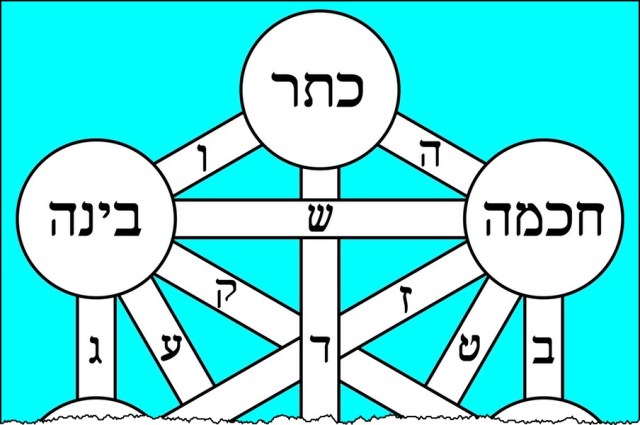
Tree_of_life_bahir_Hebrew-01cr

My latest blog post for The Jerusalem Post:

“Whereof we cannot speak, about that we must remain silent,”1 advised the Austrian Jewish philosopher Ludwig Wittgenstein.

People are never very good at remaining silent. That’s true even for things we can’t talk about in ways that make any sense.

Kabbalah (Jewish mysticism)2 is an extended exercise in talking about things we can’t talk about. As a result, it’s easy to dismiss Kabbalah as mythology, poetry, and the fevered visions of madmen.

But that’s a mistake. Speaking in imagery and metaphor, Kabbalah points to some important truths about our world. It only points to them because it can’t articulate them, at least not very well. Neither can I. But they’re still true.

Jewish rationalists like me tend to regard Kabbalah as an embarrassment. But let’s take a cue from Yoram Hazony, who asked an interesting question about the Bible:

”What if the texts … or many of them are in fact much closer to being works of reason than anything else — only we don’t know it because this fact has been suppressed (and continues to be suppressed) by an alien interpretive framework that prevents us from seeing much of what is in these texts?”3

Might the Kabbalah contain rational insights that we’ve overlooked because they’re stated in obscure and mythological terms? Philosophy has been defined as an attempt to answer three questions:

  • What exists?
  • How do we know?
  • Therefore, how should we live?

Philosophical Insights of Kabbalah

A key insight of Kabbalah, and of mysticism generally, is that some answers to the first question — What exists? — elude our ability to understand or express in language. Because the answers can’t be expressed in language, Kabbalists can’t just state them. Instead, they try to lead us to the answers by devices such as images, meditations, rituals, and stories. Stated very imperfectly, some of the answers seem to be:

  • God causes everything to exist.4
  • God is both transcendent and immanent. In one sense, God is separate from the world, and in another sense, God is in everything.
  • God uses language to create the world we see around us.
  • The world has an underlying unity. Our separation of reality into different things, times, places, and events is a superficial illusion.

A contemporary example of this view is given by Arthur Green, one of our professors at Hebrew College:

”Unity is the only truth, and all divisions of reality, including the most primal dualities (God/world, good/evil, male/female, and lots more) are relative falsehoods. That does not mean, I hasten to add, that we can or should live without them.”5

The Grammar of Creation

One Kabbalistic source of answers to the first question is the Sefer Yetzirah (The Book of Creation). We aren’t sure exactly when it was written or by whom, though it was probably written between the first and ninth centuries CE. It describes the world as having three layers: cosmos, time, and humanity. God created the world by using the 22 letters of the Hebrew alphabet and 10 sefirot:

”With 32 mystical paths of Wisdom engraved [Hashem], the Lord of Hosts, the God of Israel … And He created His universe with three books: with text, with number, and with communication.”6

Rabbi Aryeh Kaplan (1934-1983) explains:

”These 32 paths are manifest as the 10 digits and the 22 letters of the Hebrew alphabet. The 10 digits also manifest in the Ten Sefirot, which are the most basic concepts of existence … The letters and digits are the basis of the most basic ingredients of creation, quality and quantity … Numbers, however, cannot be defined until there existed some element of plurality [which] came into existence only with the advent of creation.”7

Another writer describes the implications:

”The idea that the universe was created by Divine speech is an ancient one in Judaism, and the Sefer Yetzirah developed it systematically. The principle seems to be that if creation is accomplished by language, then the laws of creation are the laws of language. Grammar was thus conceived as the basic law of nature … Everything in the universe, following grammatical principles, has two aspects, parallel to the gender duality of masculine and feminine.”8

Suspiciously Rationalistic

That sounds familiar in a couple of ways.

First, it’s consistent with Ancient Near Eastern ideas about what it means for something to exist:

“In the ancient world something came into existence when it was separated out as a distinct entity, given a function, and given a name.”9

Second, it sounds a lot like the ideas of rationalist philosophers in our own era. They argue that mind creates the world by superimposing a layer of plurality over an underlying unity. On their view, whatever the ultimate nature of reality turns out to be, reality for us inevitably refers back to the minds that experience and understand it:

”In one sense my mind is in my head, in another sense my head is in my mind. In one sense I am in space, in another sense space is in me.”10

University of Pittsburgh philosopher Nicholas Rescher explains further:

”The very being of a particular [thing] lies in its possession of a distinguishing individuality. But the very idea of an individual calls for the existence of criteria of identity to specify how it would be distinguished from other individuals. And a criterion is an inherently mind-invoking conceptual resource.”11

In other words, the existence of separate things, in various categories and with various names, depends on a mind that separates them, puts them in categories, and gives them names — Just as the Sefer Yetzirah attributes to God’s creative activity. Without such conscious activity, the world remains “formless and void.”

Metaphysics and Mythology

What might have happened is that the Kabbalistic writers were trying to understand two kinds of realities: transcendent realities involving God, and non-transcendent realities involving the world and how it came into existence.

As they contemplated transcendent realities, the Kabbalists dreamed up all kinds of images and metaphors in their attempt to comprehend the incomprehensible. When they turned their attention to more mundane realities that were actually comprehensible, they still thought in terms of the fantastic imagery they’d constructed to picture the Divine — so that’s what they used. The result was to obscure instead of instruct.

There’s a lot in the Kabbalistic literature, both for philosophical insights and for purely artistic enjoyment. Even if some versions of “pop Kabbalah” are cringe-inducing, the real thing is well worth our attention.

Works Cited

Bosanquet, B. (1895), Essentials of Logic. Kraus Reprint Company, New York.

Dan, J. (2006), Kabbalah: A Very Short Introduction. Oxford University Press, Oxford, UK. Kindle edition.

Green, A. (2003), Ehyeh: A Kabbalah for Tomorrow. Jewish Lights Publishing, Woodstock, VT. Kindle edition.

Hazony, Y. (2012), The Philosophy of Hebrew Scripture. Cambridge University Press, Cambridge, UK.

Kaplan, A., translator (1990), Sefer Yetzirah: The Book of Creation. Samuel Weiser, Inc., York Beach, ME.

Matt, D. (1995), The Essential Kabbalah. HarperCollins, New York.

Rescher, N. (1973), Conceptual Idealism. Basil Blackwell, Oxford, UK.

Walton, J. (2006), Ancient Near Eastern Thought and the Old Testament. Baker Academic, Grand Rapids, MI. Kindle edition.

Wittgenstein, L. (1961), Tractatus Logico-Philosophicus. Routledge & Kegan Paul, London, UK.

Footnotes


  1. Wittgenstein, L. (1961), p. 150. My translation of the German text “Wovon man nicht sprechen kann, daruber muss man schweigen.” I didn’t like the translation given by Pears & McGuinness. 
  2. The term “kabbalah” has been used to refer to Jewish mysticism, non-Jewish mysticism, and to non-mystical elements of the Jewish tradition. This blog post is only about the first. 
  3. Hazony, Y. (2012), p. 1. 
  4. Causation by God is not causation in the normal, scientific sense. It does not occur in time, although we might perceive it that way. Divine causation is beyond our understanding. 
  5. Green, A. (2003), loc. 132. 
  6. Kaplan, A. (1990), p. 5. 
  7. Ibid, p. 5. 
  8. Dan, J. (2006), loc. 412. 
  9. Walton, J. (2006), loc. 1466. 
  10. Bosanquet, B. (1895), p. 17. 
  11. Rescher, N. (1973), p. 99. 
Posted in Bible, Jewish Philosophy, Judaism, Philosophy, The Jerusalem Post | Tagged , , , , , , , , , , , , , , | Leave a comment

Myth and Its Meanings

My latest blog post for The Jerusalem Post:

Biblical creationists get a bad rap. People think they’re completely wrong. But they’re not.

Oh, sure, they’re wrong about the science. The world wasn’t created in 4,004 BCE on October 23, as calculated by the Christian Bishop James Ussher (1581-1656). Nor was it created at precisely nine in the morning on that date, as calculated by Dr. Charles Lightfoot of Cambridge University. Humans did not live with dinosaurs and there was never a worldwide flood.

In truth, I don’t think that creationists themselves have a clear idea of what they’re about. Their rejection of science is not mere ignorance, though there’s some of that. Nor is it fear of modernity, though there’s some of that. I’m not too wild about modernity, myself.

Creationists are uneasy about something, but they can’t quite articulate what it is. Instead, they offer specious arguments against evolution or for a young earth.

On their behalf, I will state what I think is their real objection: Science doesn’t have all the answers.

Science can tell us what happened, but it can’t tell us the meaning of what happened. It can’t tell us if what happened was important, or more crucially, if we are important. It’s a big universe out there. Are we really just animated specks of dust in a barren cosmos — talking monkeys with delusions of grandeur? Our hearts rebel at such a suggestion.

And on that point, creationists are right. Science has nothing to say about that kind of meaning. We have to discover it for ourselves. If we can’t discover it, then we have to invent it: that is, we have to create myths.

Myths usually have not one, but three levels of meaning: literal, metaphysical, and practical. The levels correspond to the questions: “What happened?”, “Why?”, and “How should you live?” Let’s look at an example.

The Biblical Flood Story

Consider the flood story in Genesis 6-8. The Ancient Near East had numerous catastrophic floods that might have given rise to the story. To the people of that place and time, such floods affected all or most of the land they knew about. It seemed like the whole world was flooded, so that’s how they told the story.

Scientific evidence from archaeology, geology, and history suggests various explanations of flood legends, including the Genesis story. Biblical scholar Nahum Sarna argues that the story originated in Mesopotamia rather than in Canaan, since Mesopotamia was subject to frequent flooding and Canaan was not:

“A flood of such cataclysmic dimensions could have taken place, or have been imagined, only in a land subject to inundations … If Canaan were the origin of the story of Noah, the ark coming to rest on Mt. Ararat in southeastern Turkey would be strange and inexplicable.”1

Another possibility is that flood legends stem from a “Black Sea flood.” Prior to 5500 BCE, what is now the Black Sea was a large lake. Glacial melting caused sea levels to rise. As a result, the Mediterranean Sea broke through the Bosphorus Strait and flowed into the lake. That flooded 40,000 square miles around the coast of the lake, wiping out all human settlements in the area. It could be the earliest source of the flood story in Genesis.2

A third hypothesis was offered by the 20th-century polymath Isaac Asimov (1920-1992). He speculated that a large meteorite might have struck in the Red Sea, causing a massive tidal wave that surged inland and wiped out local populations.3

Myth Meaning 1: Literal Meaning

Whatever floods gave rise to the legends, their literal meaning was clear. In the Biblical story, God flooded the earth, saving Noah’s family and pairs of various animal species to repopulate the world. In other flood legends, anthropomorphic gods flooded the earth and usually saved one family.

Depending on how we interpret its supernatural elements, myth on this level is either:

  • Literally meaningless if it refers to beings that transcend our world, or
  • Literally false if it refers to non-transcendent beings that do not exist.

Myth Meaning 2: Metaphysical Meaning

But apart from who made the flood happen, why did they do it? What did it show about the world? The human mind abhors a vacuum. There had to be some explanation. That kind of explanation is metaphysical, and refers to what the universe is like in general.4

If we think that the world is random and amoral, we will look for a random and amoral explanation. If we think that the world is rational and moral, we’ll look for a rational and moral explanation. This is called abductive reasoning, “constructing general principles as explanations for particular events, such that if the principles are true, then the events are explained.”5

The best known Mesopotamian flood story is at the end of the Gilgamesh epic. A copy of the epic from 1400 BCE was found in excavations at Megiddo, so the story was known in Canaan and by the Biblical writers. In the “facts” they describe, the Biblical and Gilgamesh flood stories correspond point by point:6

  • The materials used to construct the ark, as well as its design, are the same in both stories and are listed in the same order.7
  • The order of events is the same in both stories. The ark lands on a mountaintop, after which Noah / Utnapishtim releases birds. After the ark is emptied, Noah / Utnapishtim offers sacrifices.
  • The mountain where the ark lands is in Northern Mesopotamia, not in Canaan.
  • “The Lord smelled the pleasing odor” of Noah’s sacrifices, which does not occur elsewhere in the Bible but does occur in the Gilgamesh epic, in which “the gods smelled the sweet savor” of Utnapishtim’s sacrifices (Tablet XI, line 161).

But it’s the differences between the two stories that show their metaphysical meaning. In the Genesis story, God floods the world because of human immorality and saves Noah because he is “a righteous man in his generation.”8 In the Gilgamesh epic, the reasons for the flood and for the gods saving Utnapishtim are not specified.

Thus, the Biblical story means that the world is governed by God and moral law. The Gilgamesh story means that the world is random and amoral.9

Myth Meaning 3: Practical Meaning

How we live depends partly on what we think the world is like. In the Biblical story, we learn (level 2) that the world is rational and moral. Wickedness is punished and virtue is rewarded. Even if nobody over eight years old thinks it’s always true, the practical meaning helps us make decisions about how to act. We should act morally and revere God.

The pagan stories, on the other hand, are mostly amoral. In Gilgamesh, the gods decide to drown humankind for no particular reason. In Atrahasis, another flood legend, they decide to drown humankind because people make too much noise. In those kinds of stories, the world is random, unpredictable, and frightening: You might die for no reason or for some trivial reason. How you live doesn’t make much difference.

What It All Means

Myths are often literally false, but it’s a mistake to assume they have nothing to offer us. Myth is fiction that tells a larger truth about us, about our societies, and about our world. Whether myths are Biblical, moral, or historical, they help us discover who we are and how we should live.

Works Cited

Asimov, I. (1971), Asimov’s Guide to the Bible: The Old Testament. Avon Books, New York.

Azize, J. and Weeks, N., editors (2007), Gilgamesh and the World of Assyria. Peeters Publishers, Leuven, Belgium.

Gardner, J., translator (1985), Gilgamesh. Vintage Books, New York. Kindle edition.

Sarna, N. (1966), Understanding Genesis. Jewish Theological Seminary, New York. Kindle edition.

Slone, D.J. (2004), Theological Incorrectness: Why Religious People Believe What They Shouldn’t. Oxford University Press, Oxford, UK. Kindle edition.

Footnotes


  1. Sarna, N. (1966), p. 39. 
  2. Van Loon, A.J., “The Black Sea Flood Question.” Biblical Archaeology Society, December 11, 2011. 
  3. Asimov, I. (1971), Vol. 1. 
  4. The word “metaphysics” means “after the physics.” An early editor of Aristotle’s writings gave that name to sections that came after Aristotle’s work on physics
  5. Slone, D.J. (2004), loc. 138. 
  6. Azize, J. and Weeks, N. (2007), article by Rendsburg, G., “The Biblical Flood Story in the Light of the Gilgamesh Flood Account.” 
  7. Sarna, N. (1966), p. 39: “The Hebrews were very little engaged in maritime enterprise and were not well practised in the arts of seafaring. The detailed and elaborate description of the ark building would be unlikely in a [story originated by the ancient Israelites].” 
  8. Biblical scholars still aren’t sure if Genesis 6:9 means that Noah was just plain righteous, or if he was only righteous compared to the wicked generation in which he lived. 
  9. Gardner, J. (1985), loc. 4364: “The second half of the column brings the tablet to an end in a most decisive way with a terrible truth: there is no permanence. The questions Utnapishtim raises … indicate a kind of negative wisdom. Whatever humans may do to ensure a lasting condition (building houses, cutting contracts, dividing shares, even fighting), nothing lasts.” 
Posted in Bible, Jewish Philosophy, Judaism, The Jerusalem Post | Tagged , , , , , , , , , , , , , , , | 1 Comment

Creation But Not Ex Nihilo

Cosmology-01cr1

My latest blog post for The Jerusalem Post:

How did the world get here?

That question didn’t start with the ancient Israelites and it probably won’t end with us. Our scientific attempts to explain the origin of the universe are speculative and mostly unverifiable. The field of cosmology has made some progress, but it’s still more philosophy than science.1

Since we’re stuck with philosophy anyway, what does the Bible say about the origin of the universe?

Everyone knows the answer by heart:

“In the beginning, God created the heaven and the earth.”

That’s a literal translation of Genesis 1:1: Bereshit bara Elohim et ha shamayim ve et ha aretz. It’s perfectly respectable. The Jewish Publication Society’s 1917 English-language edition of the Tanakh used it.

The phrasing suggests God created the world ex nihilo — that is, out of nothing. At first there was nothing, then God waved His hand and poof!, the universe appeared out of nowhere. That’s our traditional belief. The Jewish sage Saadia Gaon devoted a whole chapter of his Book of Beliefs and Opinions to defending it.2

However, the historical context of the story suggests a different phrasing, used in the Jewish Publication Society’s 1962 English translation:

“When God began to create heaven and earth — the earth being unformed and void, with darkness over the surface of the deep and a wind from God sweeping over the water … “3

That makes it sound like God did not create the world out of nothing. Something already existed, but it was unformed and void. God simply imposed order on a pre-existing chaos.

That interpretation has several things going for it.

First, it gets God off the hook for the existence of evil. If He created everything ex nihilo, then God created evil as well as good. The wicked prosper and the righteous suffer. The innocent get sick and die. People of conscience have agonized for millennia about it.

However, if God only imposed order on a pre-existing chaos, then evil already existed when God created the world.

That’s more than just a convenient solution to the problem of evil: It’s consistent with the text. Genesis describes the primordial world as unformed and void, containing “darkness” and “the deep,” all of which symbolized evil to cultures around the time and place of the Biblical writers. An alternative translation of “unformed and void” (tohu ve bohu) is “welter and waste,” connoting emptiness and futility, also evil.4

Second, it’s consistent with other ancient creation stories such as the Mesopotamian Enuma Elish, which was known to ancient Israelites. Most such stories have a deity imposing order on chaos.

In the Enuma Elish, the god Marduk defeats the sea goddess Tiamat and splits her body into pieces, forming the waters above and below the sky. That clearly corresponds to the Genesis story, in which:

“God said, ‘Let there be an expanse in the midst of the water, that it may separate water from water.’ God made the expanse, and it separated the water which was below the expanse from the water which was above the expanse. And it was so. God called the expanse Sky.”5

Many ancient peoples, including the Israelites, seemed to think of the primordial world as a vast amount of water.6 Moreover, contrary to what we know now, they believed that the sky was solid: for example, Exodus 24:10 refers to it as a “pavement of sapphire.” Because the sky was solid, it could separate the waters above it from the waters below it.

A lot of God’s creative activity in Genesis consists of separating things from each other and then naming them. That agrees with ancient ideas of what it meant to create things and what it meant for them to exist:

“In the ancient world something came into existence when it was separated out as a distinct entity, given a function, and given a name.”7

In the Enuma Elish, Marduk acquires 50 different names when he becomes king of the gods — one name for each function that would have been performed by a separate god. Likewise in the Bible, God has somewhere between 18 and 72 names, depending on who’s counting. That might be a remnant of an earlier polytheism.

So when God separates light from darkness, water above the sky from water below the sky, and names all of those things, the ancient Israelites would have considered it equivalent to creating them.

None of this means, of course, that the Genesis creation stories aren’t true in the way that foundational stories can be true. But the Biblical text doesn’t interpret itself. Knowing the intellectual and historical context in which the stories were first conceived and written down helps a lot when we try to understand their significance.

Works Cited

Alter, R., translator (2004), The Five Books of Moses. W.W. Norton & Company, New York. Kindle edition.

Brettler, M. et al, editors (2014), The Jewish Study Bible, second edition. Oxford University Press, Oxford, UK. Kindle edition.

Rosenblatt, S., translator (1948), The Book of Beliefs and Opinions. Yale University Press, New Haven, CT.

Walton, J. (2006), Ancient Near Eastern Thought and the Old Testament. Baker Publishing Group. Kindle Edition.

Footnotes


  1. There is some evidence that ultimate cosmological explanations are impossible, but it’s beyond the scope of this blog post. 
  2. Rosenblatt, S. (1948), pp. 40-46. 
  3. Brettler, M. et al (2014), loc. 1230. 
  4. Alter, R. (2004), loc. 1007. 
  5. Brettler, op cit, loc. 1246. 
  6. It is interesting, though probably coincidental, that land mammals including humans evolved from earlier aquatic species. From an evolutionary perspective, our primordial world was indeed made of water. 
  7. Walton, J. (2006), loc. 1470. 
Posted in Bible, Jewish Philosophy, Judaism, Philosophy, The Jerusalem Post | Tagged , , , , , , , , , , , , , | 4 Comments

How Theism Has Meaning

God-Domain

My latest blog for The Jerusalem Post:

In ancient times, Jewish faith and practice were different from what they are today. Most people know that. However, they usually don’t know the details and don’t think about the implications.

In the beginnings of our faith, just as for most theistic faiths, we thought of God in anthropomorphic terms. He had a physical body. He was finite, more powerful than humans but not omnipotent, and He lived in the universe but had not created it out of nothing:

“Both Christians and Jews, each in their own way, have even accepted God’s physical attributes without much care … Prephilosophical Jews and Christians accepted both psychic and somatic anthropomorphism as a root principle of their faith.”1

That primitive idea of God makes our central Jewish beliefs relatively straightforward — at least on the level of meaning, if not of historical and archaeological evidence.

“God gave the Torah to Moses at Sinai” meant that a finite, visible being with a physical body, who lives in the universe but did not create it, dictated a book to a man. It’s quite conceivable. “God chose the Jewish people” meant that the same being made a covenant with the ancient Israelites, following the structure used by the Hittite emperor for suzerain treaties with vassal states.2

However, as our concept of God evolved, it caused problems for our traditional beliefs.

Starting as an anthropomorphic national god similar to other national gods of the Ancient Near East, He was reimagined as the Creator ex nihilo of the universe. He was infinite, transcendent, and utterly “other.” That had some philosophical merit, but it made our traditional beliefs as incomprehensible as the God to whom they referred, who had:

“… been reduced—or elevated, according to one’s own personal taste—to an impersonal principle: Omniscient, Omnipotent, All-Good, Infinite, and so on … Philosophy has lost its radical doubt (God is still affirmed as a person), while myth has lost its fire (God is not much of a person).”3

Making God transcendent and incomprehensible makes belief that “God gave the Torah to Moses at Sinai” and other theistic beliefs into nonsense, because their subject is unknown and unknowable. According to Maimonides, the verb is equally unknowable:

“His essential attributes … must not be like the attributes of other beings … Similarly the terms ‘knowledge,’ ‘power,’ ‘will,’ and ‘life,’ as applied to Him, may He be exalted, and to all those possessing knowledge, power, will, and life, are purely equivocal, so that their meaning when they are predicated of Him is in no way like their meaning in other applications.” 4

Therefore, we end up with “Blank blank the Torah to Moses at Sinai.” The belief no longer has any obvious logical meaning.

The belief is also immune to empirical testing. The parts that have ordinary meaning (“… the Torah to Moses at Sinai”) imply that there should be historical and archaeological evidence of corresponding events such as the Exodus. Such evidence either does not exist, is not adequate, or is contradicted by the evidence we have.5

So we have a belief that, considered as a whole, seems meaningless. It doesn’t assert any facts we can understand. The parts that have ordinary meaning are believed in spite of absent or contrary empirical evidence. Whatever it is, it’s not a normal belief like “Joe gave the book to Sarah.” But people say their beliefs about God have meaning for them. They’re even willing to die for those beliefs. What can the meaning be?

There are at least three answers. The first is “theological incorrectness.” In ordinary life, we think of God anthropomorphically even if we know better. We do it because it’s efficient. It helps us solve moral problems without getting lost in philosophical complications about God’s true nature.6

The second answer is that beliefs can be meaningful in more than one way. Usually, it’s by pointing to other beliefs: the belief that “Joe has brown hair” points to the belief that “Joe has hair.” However, beliefs can also point to behavior. If we believe that God commanded us to keep the Sabbath, it implies we will do certain things that are morally and socially helpful. People feel that rejecting the belief would reject all of its positive consequences along with it. Understandably, they don’t want to reject the belief.

The third answer is that beliefs about God do point logically to other beliefs — but only to beliefs about God and related concepts (see the figure at the beginning of this blog post). That kind of meaning is limited in our minds and hard to explain, but it does exist.

Beliefs about God are meaningful, though sometimes not in the way we think. They’re meaningful because they help us in our decisions, our lives, and our communities. For most of us, that’s quite enough.

Works Cited

Brettler, M. et al, editors (2014), The Jewish Study Bible, second edition. Oxford University Press, Oxford, UK. Kindle edition.

Kugel, J. (2007), How to Read the Bible. Free Press, New York.

Muffs, Y. (2005), The Personhood of God. Jewish Lights Publishing, Woodstock, VT. Kindle edition.

Pines, S. translator (1963), The Guide of the Perplexed, Volume 1. University of Chicago Press, Chicago.

Slone, D.J. (2004), Theological Incorrectness: Why Religious People Believe What They Shouldn’t. Oxford University Press, Oxford, UK. Kindle edition.

Footnotes


  1. Muffs, Y. (2005), loc. 182. 
  2. Kugel, J. (2007), p. 243. 
  3. Muffs, Y. (2005), loc. 195. 
  4. Pines, S. (1963), p. 131. 
  5. Brettler, M. et al (2014), loc. 5231. 
  6. Slone, D.J. (2004), loc. 595ff. 
Posted in Jewish Philosophy, Judaism, Philosophy, The Jerusalem Post | Tagged , , , , , , , , , | 1 Comment

Belief, Backward and Forward

My latest blog post for The Jerusalem Post:

Judah Halevi was a poet. Saadia Gaon and Moses Maimonides were philosophers. On the surface, their approaches to religious belief seem almost completely different. But at a high level, they agreed almost completely on one point: “Why believe?”

Halevi (1086-1145 CE) is today best remembered for The Kuzari 1, which presents a fictional dialogue between a king and a Jewish sage. The king dreams an angel told him that his actions were not pleasing to God, so he asks a philosopher, a Christian, and a Muslim for advice.

The philosopher responds with airy abstractions, saying that God is beyond our understanding and cannot be pleased or displeased. He gives logical arguments but dismisses the king’s main concern: What he should do to please God?

The Christian and the Muslim are more sympathetic, but they fail to offer adequate evidence for their religious claims. Both of them recognize the validity of the Torah, so the king finally turns to a Jewish sage.

The sage says simply that he believes in the God of Abraham, who revealed Himself to the entire Jewish nation at Sinai and proved Himself by miracles. The sage says that because God revealed Himself publicly to a vast number of people, His existence and revelation are undeniable, as is His choice of the Jewish people as “the pick of mankind.”2 The sage says that by converting to Judaism, the king could make his actions pleasing to God.

Halevi was deeply distrustful of our ability to find religious truth by reason. He based his claims on the belief of Jewish people in his time that their ancestors had experienced an anthropomorphic God at Sinai.

On the other hand, both Saadia (882-942 CE) and Maimonides (1135-1204 CE) thought that reason could find any religious truth we had the ability to understand. Saadia wrote:

“There exist three sources of knowledge: The knowledge given by sense perception; the knowledge given by reason; and inferential knowledge.”3

Saadia thought we could get most of our knowledge, including religious knowledge, from those sources. He later added “authentic tradition” as a fourth source, but unlike Halevi, he did not rely on it as the central evidence for his beliefs. Maimonides wrote similarly about the three grounds of knowledge:

“The first is a thing for which there is a clear proof deriving from man’s reasoning … The second is a thing that a man perceives through one of the five senses … The third is a thing that a man receives from the prophets or from the righteous.”4

Like Saadia, Maimonides recognized the validity of tradition because he believed in rabbinic Judaism, but he put tradition in last place. Most of his ideas about God were based on philosophical reasoning.

Saadia and Maimonides both recognized tradition but relied mainly on reason. Halevi recognized reason but denied that it was a reliable guide in religion. How did the three of them agree “almost completely”?

They agreed in assuming that beliefs could only be justified by looking back. For Halevi, we looked back at our tradition about Sinai. For Saadia and Maimonides, we looked back at empirical evidence and logical arguments. We had to look backward at the reasons for the beliefs, not forward at the results of the beliefs.

As a result, all three of them were only vaguely aware that beliefs do a lot more than make statements. Beliefs also perform moral, psychological, and social functions. They help us to lead decent, happy lives in stable, harmonious societies. Saadia and Maimonides followed the principle in their actions, even though it did not fit into their philosophy. The closest Maimonides came was in seeing certain beliefs as “necessary” for a healthy society.5

Religious beliefs, in particular, are mainly about life rather than about logic. You could give a dozen logical interpretations of a belief that “God gave the Torah to Moses at Sinai” and they’d all be wrong. The belief isn’t meaningful and justified because of logic. Instead, it’s meaningful and justified because it supports community, morality, respect for law, and reverence for the Divine.

Many centuries later, Moses Mendelssohn observed that even logically incorrect beliefs could have good results. He said that we should consider the importance of those results:

“Whoever cares more for the welfare of mankind than for his own renown will keep a rein on his opinions concerning [dubious beliefs] … I am obliged to remain silent if these errors are accidentally connected to the promotion of the good.”6

Logic, evidence, and tradition are all valid justifications of belief — but results are also important.

The truth of the Jewish tradition resides only partly in history. Its role in our present and future gives it on-going truth and meaning for our lives.

Works Cited

Gottlieb, M. (2011), Moses Mendelssohn: Writings on Judaism, Christianity, and the Bible. Brandeis University Press, Waltham, MA.

Lewy, H. et al (2006), 3 Jewish Philosophers. Toby Press, London, UK. Kindle edition.

Twersky, I. (1972), A Maimonides Reader. Behrman House, Springfield, NJ. Kindle edition.

Footnotes


  1. The formal title is The Book of Refutation and Proof on Behalf of the Despised Religion
  2. Lewy, H. (2006), loc. 8403. 
  3. Ibid, loc. 3040. 
  4. Twersky, I. (1972), loc. 6194. 
  5. Ibid, loc. 4179: “The Law also makes a call to adopt certain beliefs, belief in which is necessary for the sake of political welfare. Such is our belief that He, may He be exalted, is violently angry with those who disobey Him and that it is therefore necessary to fear Him and to dread Him and to take care not to disobey.” Maimonides did not believe in an anthropomorphic God, so he could not see the belief as logically true: only as a useful support for moral behavior. 
  6. Gottlieb, M. (2011), p. 12. 
Posted in Bible, Epistemology, Jewish Philosophy, Judaism, The Jerusalem Post | Tagged , , , , , | 2 Comments

Ending the Violence, Part 2

My new blog post for The Jerusalem Post:

As I discussed in last week’s blog post, human violence has some specific biological causes: kin selection, territoriality, and lack of empathy.

We are created in God’s image spiritually, but our bodies have the same biological nature as lower animals. We can choose what we do, but our choices are biased by our biology. To counteract that bias, we must make ourselves aware of it.

Kin selection is an evolutionary mechanism that inclines us to trust, help, and cooperate with those we perceive as genetic relatives or members of our group. It inclines us to distrust and attack those we perceive as genetically unrelated to us, since they compete with us and our kin for food, living space, and mates. It operates below the level of conscious thought and biases our thinking about people. Most animals, including humans, exhibit kin selection behavior.

Territoriality makes animals regard certain areas as their own, and inclines them to attack perceived genetic competitors that stray into their territories. Animals from insects to human beings exhibit territorial behavior.

Kin selection and territoriality make us tend to hate, fear, or attack perceived genetic competitors we encounter. Our fear isn’t entirely irrational, because for the same reasons, they are inclined to attack us.

Empathy

Even if we feel like attacking each other, empathy can stop us from doing it. Empathy requires that:

  • We can perceive what other people feel. By their behavior and facial expressions, we know if they are happy or suffering.
  • We feel what we think other people feel. When we perceive someone happy or suffering, we “mirror” a little of the same feeling in ourselves.
  • We care what other people feel. We want them to feel good and we don’t want them to suffer.

However, like most human traits, empathy varies in populations. Some people (16 percent) naturally have a lot of empathy, some (16 percent) have very little, and most (68 percent) have a medium amount. People’s natural empathy can also be damaged by trauma such as war, violence, or abuse, especially in childhood.1

Adding the percentages from the high-empathy and medium-empathy groups means that 84 percent of people either aren’t likely to harm others or can be talked out of it by appeals to conscience. The low-empathy 16 percent can’t be.

So that’s the problem. There is no perfect solution, but there are things we can do to improve the situation.

Minimize Triggers of Aggression

If we encounter people who seem like our genetic competitors, biology inclines both them and us to attack or run away. Such encounters are an obvious aggression trigger. Human groups that can’t stop killing each other should be physically separated from each other. That minimizes both their impulses to harm each other and their opportunities to do so.

As noted earlier, the low-empathy 16 percent don’t have enough conscience to be talked out of violence. Separation is especially important for them. We should also impose swift, certain, and terrible punishment on those who transgress.

Be Aware of Cultural and Religious Difference

When we encounter people who differ culturally from us, some of their behavioral conventions differ from ours. As a result, it’s harder for us to interpret some of their behavior and facial expressions and it’s harder for them to interpret ours. That makes empathy more difficult because each side either can’t tell what the other feels or it identifies the other’s feelings incorrectly.2

Religious belief is involved as a proxy for genetic difference. It affects how people look, talk, and behave. The primitive parts of our brains interpret such differences as meaning that someone is a genetic competitor of our families and our people. That automatically triggers our fear-aggression response, and separation helps prevent it.

Educate Positively for Peace

Apart from the low-empathy 16 percent, the rest of the population is either naturally peaceful or can be helped to reduce their aggressive impulses.

Last week, I mentioned that when white and black Americans were shown images of people of the other race, the fear-aggression centers of their brains activated automatically before they had any time to think.

However, when they were told positive things about the opposite-race people in the pictures, the thinking parts of their brains decreased their automatic fear-aggression responses. Education and the news media can prime people to attack each other, or they can promote peace.

Freedom of speech is an important value, but it’s not the only important value. When people’s lives are at stake, both government and the media should act responsibly to avoid inflaming hatred.3

Create Positive Experiences of Cooperation

A final step is to create positive experiences of cooperation whenever possible. If adversaries can work together on areas where they agree — even mundane things like getting roads repaired — they begin to see each other less as “the dangerous other” and more as fellow human beings with needs, interests, and points of view. That both decreases their aggressive impulses and increases their empathy.

Some Complications

Of course, there are complications that make it hard to reduce violence. If it were easy, humanity would have mastered it by now.

First, external conflict promotes internal harmony. That’s not news. In his play “Henry IV, Part 2” (1590), William Shakespeare had King Henry advise his son to:

“Busy giddy minds with foreign quarrels, that action hence borne out may waste the memory of the former days.”

Likewise, sociologist William Graham Sumner wrote in 1906:

“The relation of comradeship and peace in the we-group and that of hostility and war towards others-groups are correlative to each other … Loyalty to the group, sacrifice for it, hatred and contempt for outsiders, brotherhood within, warlikeness without — all grow together, common products of the same situation.”4

As a result, measures that reduce hostility and aggression toward “the other” will cause some increased conflict within our groups. It needs to be managed as well. We’re trading a bigger evil for a smaller one. There’s no third option.

Second, government officials sometimes have incentives to act in their own interests at the expense of the public interest. Because they are not saints, they unconsciously rationalize their actions. Leaders on both sides of a conflict must set aside their personal interests to do what is best for everyone. It’s possible, but it’s difficult. Public choice theory studies the problem.

The Talmud tells us that “not to know suffering is not to be human.” Suffering, violence, and tragedy are inescapable features of our world, but we can minimize them if we face facts and act bravely. We should.

Works Cited

Baron-Cohen, S. (2011), The Science of Evil. Basic Books, New York.

Putnam, R. (2000), Bowling Alone. Simon & Schuster, New York. Kindle Edition.

Footnotes


  1. Baron-Cohen, S. (2011), p. 22ff. 
  2. I once encountered a harmless instance of miscommunication in Washington, DC when I worked at a US government agency where most of my colleagues were from India. It took me a couple of weeks to realize that when they shook their heads horizontally in meetings, it meant “yes, I agree.” That’s the opposite of what such a gesture means when an American does it. 
  3. Our brains evolved before the invention of cameras or video. As a result, the primitive parts of our brains cannot distinguish between first-hand perceptions of real threats and vivid, realistic depictions of such threats in photos or video. 
  4. Quoted in Putnam, R. (2000), loc. 4795. 
Posted in Judaism, The Jerusalem Post | Tagged , , , , , , , , , | Leave a comment