Wisdom to Face Life’s Challenges

Stoicism is the belief that we should try to be serene and rational. It seems totally alien to our hyper-emotional culture, where people can get rich by crying and complaining without actually doing anything worthwhile.

A crucial part of stoicism is to distinguish between what we can control and what we can’t control. To get upset about what we can’t control is a waste of time and energy. We should focus instead on what we can control.

The two most famous Stoics were Marcus Aurelius, who was a Roman emperor, and Epictetus, who was a Greek slave. Epictetus wrote that:

“Of all existing things, some are in our power, and others are not in our power. In our power are thought, impulse, and the will to acquire or avoid. Things not in our power include the body, property, reputation, office, and everything that is not our own doing.” (The Manual of Epictetus)

It’s easy for us in 2024 to romanticize the Roman Empire. It embodied order, manly virtues, and great achievements. But it also embodied the heartbreak and cruelty that are too often the default setting of human society. Stoicism provided a way to cope with those harsh realities.

Marcus Aurelius offered inspiring advice: “While you live, while it is in your power, be good. A person can avoid a lot of trouble if he does not look to see what his neighbor says or does or thinks, but only to what he does himself, that his own actions are just and pure.” (Meditations IV, 17-18)

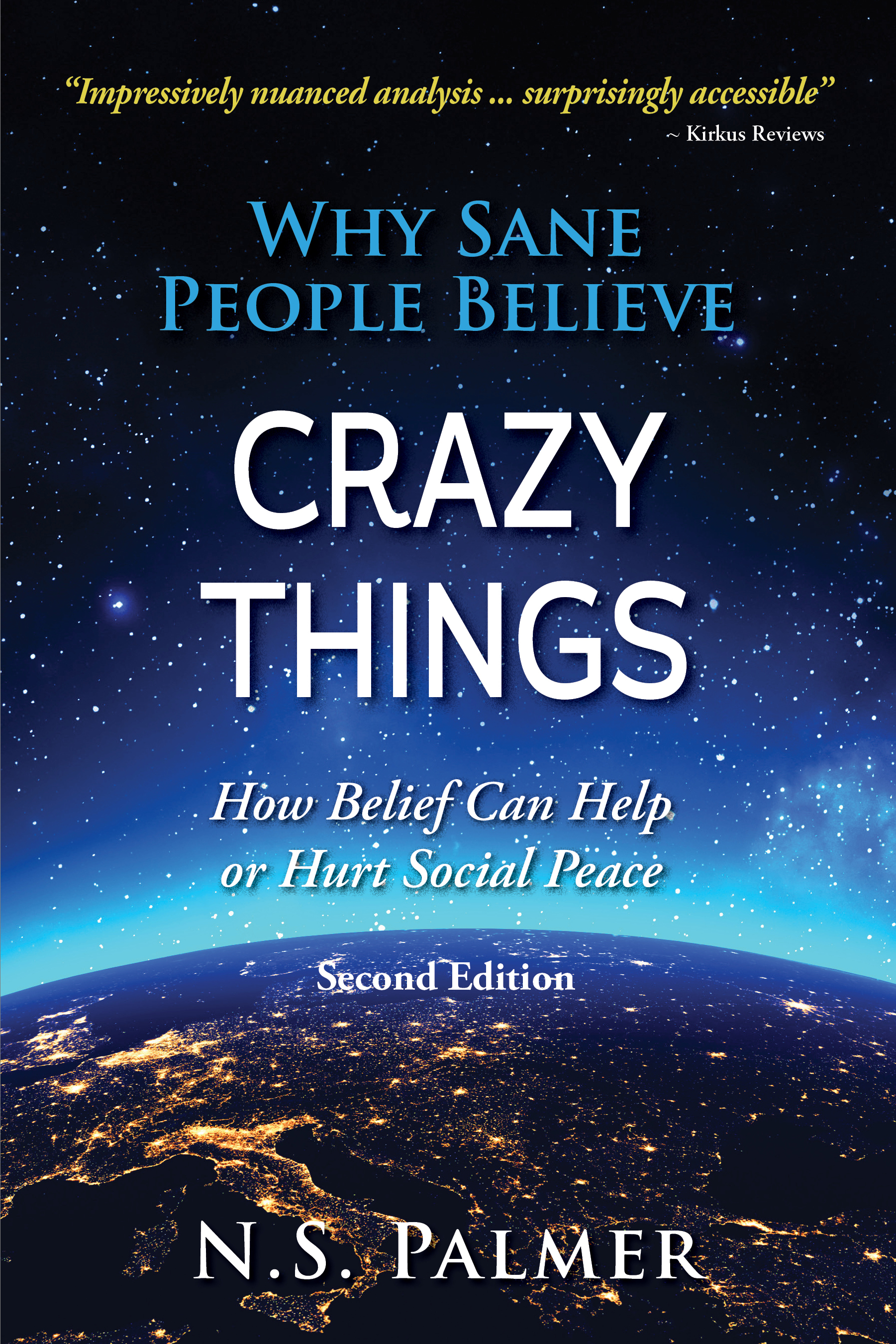
How to stay serene and rational is a key idea in my book Why Sane People Believe Crazy Things, whose second edition will be released on October 29.

Posted in Life, Philosophy, Psychology, Society | Tagged , , , , , | Leave a comment

No Law, No Heaven

The Chinese expression “wú fǎ wú tiān” (无法无天) is usually translated as “lawless,” but that’s not the literal translation.

The literal translation is “no law, no Heaven.”

Heaven is an ideal state of being, but because we aren’t angels, we need law to help us get closer to Heaven. It sets down the “rules of the road” for living in harmony with other people. So law makes it possible for us to get closer to an ideal state, “Heaven.” Without law, no Heaven.

But that ideal state, Heaven, is also what makes law possible. Without Heaven, no law.

Unless we know what we want our society to be like — its ideal state — then we have no basis for enacting or obeying any laws at all. If law isn’t based on what’s right and wrong, good and bad, then law is nothing more than power: it’s only people with guns forcing everyone else to do what they say.

That’s why the U.S. Declaration of Independence invoked “the Laws of Nature and Nature’s God.” The American Founders knew that law had to come from Heaven, however we interpret its actual existence.

Posted in Bible, Christianity, Political Science | Tagged , , , | 2 Comments

Healthy Societies Are Efficient

Efficiency isn’t everything, but healthy societies and people need it.

If you want the deep explanation of why that’s true, read about Charles Darwin’s observations of birds (finches) on the Galapagos Islands off the coast of South America.

Each island had a slightly different environment and food sources. On each island, the birds’ beaks had evolved to a shape most efficient for getting food on that particular island. Earlier birds with inefficient beaks had died out, so efficient beaks enhanced the survival of the birds that had them.

Humans are not birds, but the same principle applies: traits that enhance our survival are likely to predominate, while those that harm our survival are likely to vanish. That’s why, for example, we have the basic concepts we do: male and female, people and things, and so on. Those concepts work. Faddish and incoherent concepts such as “transgender” do not.

For societies, it’s efficient for people to have a stock of shared concepts, words, and cultural references that help their people communicate. Societies that have those things are more likely to survive and prosper than societies without them.

For example, a friend of mine recently joked that the future might be worse than the present. I replied simply, “Sufficient unto the day …,” and he knew what I meant. It was a reference to a verse in the Bible:

“Take therefore no thought for the morrow: for the morrow shall take thought for the things of itself. Sufficient unto the day is the evil thereof.” (Matthew 6:34)

To the extent that people have shared cultural touchpoints, their societies are not only more efficient but also more harmonious. My reference to the Bible both communicated my meaning and signaled to my friend that we were members of the same “in-group,” which inclines us to help and cooperate with each other.

I recently encountered a similar cultural touchpoint in studying the Chinese language. One speaker said “gèng shàng yī céng lóu.” It translates as “go up to the next level,” and means to improve, strive, or reach a goal.

But as they say in television commercials, “there’s more.” Someone who grew up in China would recognize the phrase as a reference to a poem from the Tang Dynasty (618-907 CE), titled “Climbing the Stork Tower:”

The white sun
Sinks behind the hills.
The Yellow River rushes
Forward to the sea.
To get a view
Of 300 miles,
Go up the tower
One more story of height.

Tr. by Edward C. Chang

When Chinese people use that phrase, they both communicate efficiently and signal their membership in same in-group. It strengthens their society and encourages cooperation.

China has its shortcomings, just like every country that has ever existed. But it cares less about appeasing malcontents and humoring the mentally ill than it does about building a strong society of people who work together for the common good. The Chinese have learned a lot from us, but to promote social solidarity, we could learn a lot from them.

Posted in Human Relations, Philosophy, Political Science, Psychology, Society | Tagged , , , , , , , , , , | Leave a comment

Always To Be Blessed

It’s seldom that a two-line passage from a poem can explain so much that’s wrong with the world. But Alexander Pope’s Essay on Man (1732) has just such a passage:

“Hope springs eternal in the human breast,
Man never is, but always to be, blest.”

Pope’s basic point is that we humans are wanting creatures. No matter how good our lives are, we always feel that they could be better and should be better.

We want more money. We want whatever new gadget is the shiny object of the day. We want more respect. We want to live in a nicer place. On and on. When it’s a motive for us to work hard and create good things, it’s a positive force.

But it’s more than just that. After we get what we want, the novelty wears off. Soon, we want something else. We can only want what we do not have. After we get it, our desire for it is sated. But we still desire — more, and more, and more.

It’s a basic principle of economics: Human wants are unlimited, but our resources to satisfy those wants are limited. As a result, all societies must make choices — somehow — about what to produce, how much, and who gets it.

And that’s where we come back to Pope’s insight. We always hope to be blessed — but as soon as we are, we take our blessing for granted and yearn for a new blessing. The things for which we yearn depend on our personalities and circumstances, so they’re somewhat unpredictable. It often happens that even we don’t know what we want until we see it.

Why Command Economies Don’t Work

That’s the first thing we can learn from Pope’s insight: command economies don’t work — at least if we define “work” as doing the most good for the largest number of people.

In a command economy, government officials and other people in power decide what the economy will produce, how much it will cost, who will produce it, and who can have it. Americans are getting a taste of a command economy under the Covid regime, which declares that some goods and services are “essential” and others are not.

However, even if the people in power have only good intentions — which they often don’t — it’s impossible for them to know the desires and needs of all the different people in the economy. What would it take for people to feel “blessed”? It’s different for everyone, and it changes rapidly in unpredictable ways. A bureaucrat at an agency in Washington has no way to know what it’s going to be, even if he cared.

A free market is more flexible and responsive, with millions of people who try to profit by finding ways to satisfy each other’s needs. Some ventures succeed, and others don’t. But the result is better for the vast majority of people.

In a command economy, the only people who are certain to get what they want are the people giving the commands. Americans can see that now, too. Politicians go into office as paupers and come out as multi-millionaires. “Graft” is no longer a shameful secret: it’s the main business model of American politics.

But the point is — per Alexander Pope — that politicians could be as pure as a newborn baby and as smart as Albert Einstein, but they still couldn’t make a command economy work for anyone other than themselves and their friends.

Why Some People Are Always Unhappy

Another conclusion is obvious: If we constantly obsess about what we don’t have, we must inevitably ignore what we do have.

Especially in Western countries that are still relatively prosperous, coasting on the fumes of our past achievements, we enjoy countless blessings but often take them for granted.

We do not pause to notice that we have plenty to eat, comfortable places to live, and options beyond the wildest dreams of even the richest people only a century ago; options  still beyond the reach of millions even today, in despotic countries around the world.

Why A Perfect Society Is Impossible

And that leads into the third conclusion: A perfect society is impossible, if by “perfect” we mean a society in which everyone is happy and satisfied all the time.

As flawed human beings, we feel that we never are, but always are to be blessed — someday, when people are nicer and fairer to us, institutions and customs reflect our moral values, and nobody disagrees with our basic beliefs. We’re always looking for a better place that we’re sure is just over the horizon.

And compared to the “better place” that we’ve never seen, that we’ve only imagined, our real societies seem shallow, shabby, and cruel. Some of us are so transfixed by the utopia in our heads that we try to destroy the society we have, on the assumption that whatever replaces it will necessarily be better.

But it’s not necessarily so — in fact, it’s not even probably so. The same impulse for more and better that motivates some people to do good things, motivates other people to do bad and destructive things.

Desire is part of our nature as humans. If it’s moral and rational, it’s a good thing. But if it leads us to break every rule we used to think was wise, leads us to tear down institutions and ideals that sustained us for generations, then it’s likely to be a bad thing.

Alexander Pope knew it in 1732. How many people know it in 2021?


Check out my book Why Sane People Believe Crazy Things: How Belief Can Help or Hurt Social Peace. Kirkus Reviews called it an “impressively nuanced analysis.”

Posted in Philosophy, Political Science, Society | Tagged , , , , , , , , , | 1 Comment

You Can’t Idiot-Proof the World

There’s no way to make the world safe for idiots.

No matter what you do, it can go wrong somehow. And then it won’t be safe, for idiots or anyone else.

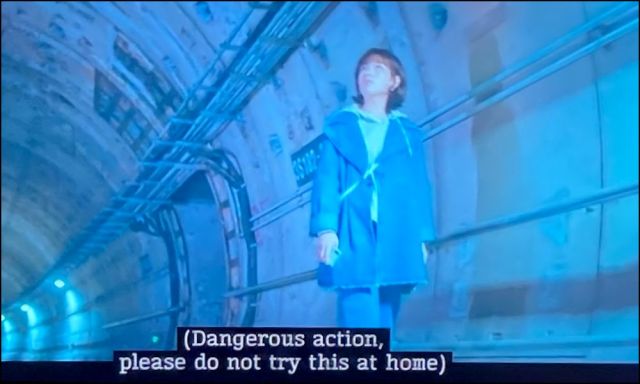
I thought of that while watching “Love Crossed,” a Chinese TV series. In one scene, the main character is walking in a subway tunnel. And the subtitles area displayed a warning:

“Dangerous action. Please do not try this at home.”

In other words, if you have a subway tunnel in your house, don’t walk in it.

How stupid does a person have to be in order to need a warning like that?

How stupid does a person have to be in order to think that other people need a warning like that?

Treating safety as our highest value is ruining our societies. Government officials have always lied to us on occasion, but now they do it continuously.

They claim that their lies are “noble” because we’re too stupid to make our own decisions. They know what’s best for us. And for them. Mostly for them.

Life involves risk. That’s always true. Our only choice is which risks to take and which risks to avoid.

But a life spent cowering in the corner is not a life. It’s a tragedy.

Someday, a big rock (or its equivalent) will drop on your head and that will be that.

Until then, free your mind. Live your life.

Posted in Life, Political Science, Psychology | Tagged , , , , , , | Leave a comment

The Basic Truths Are The Same

My mentor Brand Blanshard, a philosophy professor at Yale, said that “the basic truths of life are the same for every honest mind, whether atheist or devotee.”

My grandfather, a Methodist minister, said that “Every person you meet knows something that you don’t know. So pay attention.”

Confucius, a Chinese sage, said that “Even when walking in a party of only three, I can always be certain of learning from the other two.”

My father, a physician, said that “Smart people learn from their mistakes. Really smart people learn from other people’s mistakes.”

Confucius said that “In the presence of a good man, think about how you can learn to equal him. In the presence of a bad man, remember what you know is right.”

I guess that Prof. Blanshard was correct: the basic truths of life are the same, no matter who you are, when or where you live.

Posted in Life, Philosophy | Tagged , , , , , , , | 1 Comment

Is Racism a Useful Concept?

I recently participated in an academic discussion about whether or not “racism” is a useful concept.

Amazingly, the discussion was cordial and rational except for the moderator and one participant who was a graduate student in some version of victims’ studies. The moderator occasionally got a little hot under the collar, while the graduate student mostly spouted a lot of jargon and gibberish. She’ll do well in academia.

In any event, I argued that “racism” is not a useful concept because it’s both misleading and emotionally charged. It neither helps us get at the truth nor does it help us remedy any race-related social ills that exist. Here is my contribution to the discussion:

I agree that the term “racism,” as now used in the United States, is unhelpful. It confuses more than it clarifies.

It incites strong emotions because it’s associated with hatred and mistreatment based on race. By itself, such incitement makes the term an obstacle to rational discussion, even if it had a clear definition.

Hatred and mistreatment based on race happened in the past and they continue to happen all over the world. They are pervasive because evolution has programmed in-group / out-group bias into human nature, and racism is just one of its manifestations.

But in 2021 America, almost all whites condemn those things and try to avoid doing them, even if other groups do not. Most Americans abhor anti-black mistreatment in particular, so writers such as Ibram X. Kendi focus instead on what they consider racist policies:

“Racism is a marriage of racist policies and racist ideas that produces and normalizes racial inequities.”

One must also give Mr. Kendi credit for his candor about the nature of affirmative action and “diversity” programs:

“The only remedy to racist discrimination is antiracist discrimination.”

That was the original rationale for affirmative action back in the late 1960s, when it was sold as a temporary measure to help blacks catch up with whites. Five decades later, it’s still with us: as Nobel laureate economist Milton Friedman observed, “Nothing is as permanent as a temporary government program.” High-achieving Asian students who are rejected by Harvard because of their race might take some comfort in the fact.

There are several problems with the current focus on racism:

First, the idea of “racism” as now used is unjustifiably broad. According to Mr. Kendi, it is found in any policy, institution, or custom that “produces or sustains racial inequity between racial groups.” This extends the legal doctrine of disparate impact to every area of life.

However, official science (based on the pioneering work of Dr. Trofim Lysenko) now assures us that race has no biological basis, and that it is merely an arbitrary social construct.

If that is so, then to be antiracist is to oppose anything that leads to inequity between groups, whether or not the groups were previously considered racial. Anything that affects different groups differently, regardless of intent, is prima facie racist.

It implies that every identifiable group should get the same results in every area of life. However, I doubt that Mr. Kendi would endorse such a conclusion. Writers about race get paid a lot more money than clerks at the Department of Motor Vehicles, and yet those two groups — so we are told — are no more arbitrary than arbitrary racial groups, e.g., “people who think they are white,” “people who think they are black” (presumably not including Rachel Dolezal), and “people who think they are Dragonkin.”

Second, the focus on white-black relations assumes that we are still living in the year 1965 when the American population was 88 percent white, 11 percent black, and one percent “other.” At that time, focusing on white-black relations made sense.

But in 2021, the resident population of the United States is about 60 percent white, 20 percent Hispanic, 12 percent black, and eight percent “other.”

With 2017 median income of $81,331, Asians make more money than whites (median income $68,145), whites more than Hispanics (median income $50,486), and Hispanics more than blacks (median income $40,258). In the aggregate, the same order repeats in other areas such as academic achievement and law-abiding behavior: Asians on top, then whites, then Hispanics, then blacks.

To call the system racist (in the old sense) is inaccurate: it rewards some traits and behaviors while ignoring or punishing others. It has nothing to do with race as traditionally conceived. Though they are people of color, Asians (including those whose skin is black) tend to fare better with “white privilege” than whites do.

Racism writers who say that “whiteness” is not about skin color are telling the truth. The Smithsonian Institution’s National Museum of African-American History and Culture described whiteness in terms of traits such as self-reliance, logical thinking, work ethic, and intact families. Notably absent is anything about the traditional idea of “race.”

Instead, the list includes attitudes, institutions, and behaviors without which modern civilization could not exist. People who oppose such things are either not serious or they haven’t thought carefully about the consequences of their beliefs.

Third, preoccupation with racism harms black people by casting them as helpless victims, thereby encouraging them to blame others and discouraging them from taking control of their own lives. When combined with criticism of hard work, logical thinking, and self-reliance as “whiteness,” it both slanders black Americans and makes it more difficult for them to succeed.

Focus on racism is therefore both misleading and extremely harmful to everyone concerned.

Posted in Human Relations, Psychology | Tagged , , , , | 2 Comments

Three Tales from Amtrak

In the early 2000s, I worked for a year as an IT contractor at Amtrak’s headquarters in Washington DC. My experience there showed one of America’s greatest problems, as well as its solution.

The U.S. federal government created Amtrak in 1971 to consolidate private railroad companies that were failing because of mismanagement and competition from airlines. The “Am” was short for “America,” since it was 1971 and that kind of thing wasn’t yet considered hate speech.

So what did I learn at Amtrak?

First, it was an American company, so almost the entire IT staff was from India.

I was one of only three Americans in the department: two contractors and one Amtrak employee. For contractors, the Holy Grail was to be hired as an Amtrak employee. It made you almost fireproof and, if you made it to retirement, you were entitled both to Amtrak’s generous defined-benefit pension plan and to Social Security payments.

The Indian staff members were fine, though I did wonder why an American company had an IT staff almost entirely from India. The answer, of course, is that importing H1-B workers as indentured labor is cheaper than hiring unemployed Americans.

Second, I recall three experiences that might lead one to question the unalloyed benefits of so-called “diversity.”

I hasten to add that there are no bad guys in this story. It just shows the extra problems that you get by shoving together people of different cultures, languages, and expectations:

  • One project manager kept using the word “jeddo.” Eventually, I figured out that he meant “zero.” But his accent was so thick and his English so marginal that it was always hard to understand him.
  • We Americans nod our heads vertically to mean “yes” and shake them horizontally to mean “no.” The Indians did it the opposite way, nodding for “no” and shaking for “yes.” That also took a while to figure out.
  • In one meeting, I said that someone “was preaching to the choir.” That’s an American idiom, so I shouldn’t have been surprised when nobody understood it. I explained it.

Just for completeness, I’ll mention a problem I had with the other American contractor. She was very intelligent but had an odd quirk that took me a while to discern. If she was talking, she assumed that whatever was coming out of her mouth matched what she was thinking at the moment. It often didn’t. On weekends, she and I did part-time teaching to help college students improve their GRE scores, so I got to know her fairly well.

My year in Amtrak’s IT department was almost an ideal case for “diversity” enthusiasts. All of my co-workers were competent, they were all nice, and we all took our jobs seriously. But even under those conditions, diversity caused problems that would not have occurred with a more homogeneous staff.

And those are only three problems that I personally witnessed. If you multiply that by hundreds of millions, it shows the economic drag from people who can’t understand each other. In this case, we’re not even counting the cost of hiring unqualified or less-qualified people simply because they check the right boxes dictated by our state religion.

In essence, the problem’s solution is what Martin Luther King advocated: Judge people on their merits, not on the basis of irrelevant characteristics.

Posted in Psychology, Society | Tagged , , , , , , , , , , , | 2 Comments

Good Advice from George Washington

George-Washington.jpg

Until quite recently, U.S. President George Washington was considered the ideal American: honest, brave, wise, and patriotic. None of that has changed.

Washington offered some good advice about how to have a healthy society and a just government:

“We must take human nature as we find it. Perfection falls not to the share of mortals.”

(Letter to John Jay, August 15, 1786)

That insight is absent from the reasoning of many people who have good intentions. And if you observe how they argue, you can discern the thought process that misleads them:

  1. People should be a certain way.
  2. But they aren’t that way.
  3. Therefore, society should be designed as if they were that way.
  4. It will change people so they become the way they should be.

The applied version goes like this:

  1. Observe that human beings aren’t angels.
  2. Create laws, institutions, and morals that can only work if they are angels.
  3. A miracle happens!
  4. Suddenly people become angels, and everyone loves everyone else.

It’s a wonderful dream. How’s it working out for us in real life? Not very well.

In real life, humans (like many other species) divide into in-groups and out-groups. Members of each in-group identify non-members by four main factors: appearance, behavior, location, and familiarity. (See P.J.B. Slater, “Kinship and Altruism,” in Behaviour and Evolution.)

By itself, that wouldn’t be a problem. The problem arises because members of each group tend to regard non-members with indifference, suspicion, or outright hostility. It doesn’t even matter if the groups are “real.” You can make up arbitrary groups and cause the same effect. As Harvard biologist E.O. Wilson observed:

“Experiments conducted over many years by social psychologists have revealed how swiftly and decisively people divide into groups, then discriminate in favor of the one to which they belong. Even when experimenters created the groups arbitrarily … participants always ranked the out-group below the in-group. They judged their ‘opponents’ to be less likable, less fair, less trustworthy, less competent.”

Let’s review:

  • People naturally tend to divide into groups.
  • They often dislike, distrust, and discriminate against members of other groups.
  • They recognize members of other groups by appearance, behavior, location, and familiarity.

So what’s likely to happen if you force together people who look different, act different, believe incompatible things, see each other as members of rival groups, and who have already been propagandized to hate each other?

You know the answer. But don’t try to post it on Facebook.

Posted in Human Relations, Political Science | Tagged , , , , , , , | Leave a comment

Celebrating Pi Day

Today, March 14, is “Pi Day.” The date matches the first three digits of pi, 3.14. On the Nerd Calendar, Pi Day is even more important than Festivus or G.H. Hardy‘s birthday.

Pi is the ratio between a circle’s circumference and its diameter. You probably remember it from the formula to calculate the area of a circle:

Area of a circle = Pi times the circle’s radius squared

In honor of Pi Day, let’s look at the Ancient Egyptian method to calculate the area of a circle. It’s from the Rhind Papyrus, which is one of our main sources of information about Egyptian mathematics of that era. Here’s how they did it:

  1. Measure the diameter of the circle.
  2. Draw a square with sides whose length is 8/9ths the diameter of the circle.
  3. Calculate the area of the square.
  4. Within the limits of the Ancient Egyptians’ ability to measure it, the area of the square is the same as the area of the circle.

For example, suppose that the circle’s diameter is 9 cubits. Then the square’s sides would be 8 cubits and the square’s area would be 8 x 8 = 64 square cubits.

Compare that to the modern formula for the area of a circle, which is pi (3.14159…) times the radius squared.

The radius is half of the diameter, so the radius of the same circle is 4.5 and the square of the radius is 20.25. Plugging it into the modern formula, you get:

3.14159 times 20.25 = 63.618,

very close to the Ancient Egyptian answer of 64. The Ancient Egyptian method gives a value of pi that’s about 3.16, close to the modern value of 3.14159…

Pi is an irrational number, which means you can’t write it as a ratio of whole numbers. That annoyed the Pythagoreans, Ancient Greek mathematicians who based their whole view of reality on ratios of whole numbers. They knew that irrational numbers existed, but they tried not to think about them too much.

Posted in Life, Philosophy, Science | Tagged , , , , , , , | Leave a comment