Your Curse Can Be Your Blessing

Is your life “cursed” in some way?

A traumatic childhood? Health problems? Poor self-esteem?

You can turn your curse into your blessing.

The American novelist Ernest Hemingway said it well:

“Life breaks everyone, and afterward, some are strong in the broken places.”

We’ve all got broken places. We can either sit and cry about them, or we can get strong. We can use our pain as fuel to improve ourselves and to do good in the world.

For example, I live in the shadow of a great man. My younger siblings compare themselves to each other. But as the eldest, I compare myself to our father. It’s a humbling experience. I feel as if I can never be good enough and can never accomplish enough.

But it’s also a blessing. It spurs me to work harder and to do more. Both I and the world are better off because of my “broken places.”

I’m also a slight hypochondriac. It motivates me to exercise daily and to watch my diet. I’m better off as a result.

What are your broken places? How can you turn them into your strongest places? How can you use them to make your life better?

It’s a question worth asking.


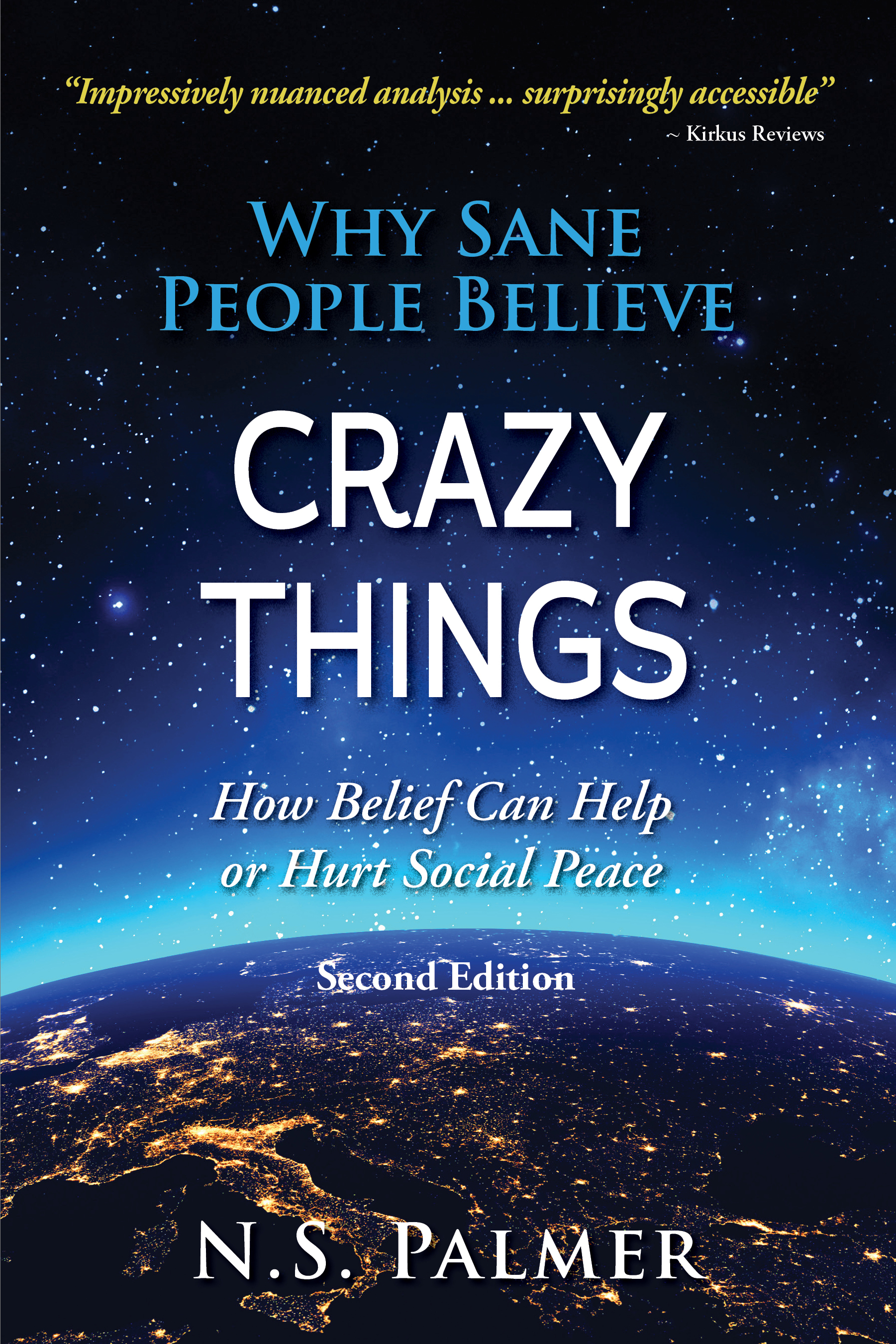
Check out my book Why Sane People Believe Crazy Things: How Belief Can Help or Hurt Social Peace. Kirkus Reviews called it an “impressively nuanced analysis.”

Posted in Life, Psychology | Tagged , , , , , , , | Leave a comment

Who Gets Veto Power?

A while back, I worked for a tech company where I reported to the company’s CEO.

The main thing I learned was never to take a job at a company founded and run by a business-school professor.

The other thing I learned was that in the wrong hands, veto power can cause a lot of trouble.

Even though I reported to the CEO, the company’s board had to approve everything I produced.

By itself, that requirement was stupid but okay. If the board members wanted to be involved at that level of detail, fine.

The problem was that each individual board member had veto power. The board had to approve my plans unanimously. A single “nay” vote sent me back to the drawing board.

And two of the board members always disagreed with each other. No matter which one I tried to please, the other would veto what I did.

That’s the kind of brilliant setup you get from a business-school professor. My actual work was easy; getting the board to agree was damn near impossible.

So are there any general lessons to be drawn from that situation?

Fewer veto holders

Let’s simplify things: Suppose that only one board member wanted to veto everything. Then the company could never do what the majority thought was best. It would only have two choices:

  • Do nothing, or
  • Do what the single veto-holder wanted, against the judgment of the majority.

Applied to society

Similarly, consider a society in which, say, 0.15 percent of the population has trait X. In other words, 99.85 percent are not X, and fifteen-hundredths of one percent are X.

If you took the United States as an example, its current population is about 329,000,000. Then 328.5 million of the people would not be X, and 500,000 of them would be X.

Should law and social policy support the happiness of the 328.5 million people who aren’t X? Or should they be tailored for the 500,000 people who are X — in effect, giving them veto power over the majority?

Giving the X group veto power means hurting the majority to help the small (less than one percent) minority.

And suppose that in addition to group X, another small minority is Y, while another is Z. Do they all get veto power?

Then we’re back to the board of directors situation: multiple people who always veto each other. It becomes impossible for society to function.

Personally, I think that if other factors are equal, every person’s welfare should count equally. If you’ve got 328.5 million people whose welfare conflicts with the desires of 500,000 people, then you take care of the 328.5 million.

You do your best to avoid unacceptable harm to the 500,000, but you’ve done the math: 328.5 million is a lot more than 500,000. You take care of the vast majority. The minority will have to adjust. It shouldn’t get veto power.


Check out my book Why Sane People Believe Crazy Things: How Belief Can Help or Hurt Social Peace. Kirkus Reviews called it an “impressively nuanced analysis.”

Posted in Human Relations, Life, Philosophy, Political Science, Society | Tagged , , , , , | Leave a comment

Why Common Sense Is So Uncommon

Why is common sense so uncommon?

I’ve been reading Robert Curry’s excellent new book Reclaiming Common Sense.

It got me thinking about why I and many other people often lack common sense.

For example, in college I was a libertarian. Mainstream libertarians believe that each of us has rights limited only by the same rights of other people: e.g., “my right to swing my fist ends where your face begins.” As long as we don’t commit aggressive violence, coercion, or fraud against others, we may do anything we like. Government exists to defend our rights.

However, a friend pointed out a contradiction. If we may do anything we like, then we may delegate our right of self-defense to any third party, not just to the government. That leads to anarcho-capitalism, under which private businesses would perform all the functions of government. So for a while, I was an anarcho-capitalist. I eventually grew out of it, mostly by studying history. If a utopian social order has never existed anywhere for longer than five minutes, you start to think there’s a reason. There is.

Here’s another example. After college, I worked on Capitol Hill for a while. I had a libertarian acquaintance who took a lack of common sense to a whole new level. He argued publicly that child pornography should be legal because if it had already been made, it was not at the current time abusing any children. The abuse had happened previously. He said that child abuse itself should be illegal, but not its result after the fact.

I want to add that I don’t believe he’d ever been within 500 feet of any child pornography. He was just afflicted with what a professor of mine called “principle-itis:” pushing abstract principles to the point of complete absurdity.

A final example is from 2019. When anyone says that America is a great country, the standard reply is “Well, it was never great for minority X!” And that’s supposed to settle the argument.

Let’s grant their point: America in the past was not always great for blacks, gays, or for women who lacked some civil rights. Occasionally, it was awful. Undisputed.

On the other hand, you would search in vain for any real human society anywhere, at any time in history, where no group was treated worse than some other group. You would also find very few societies where minority groups were treated as well as they have been in America. And last but not least, America has been pretty good in most ways for the majority of people. On utilitarian grounds — the greatest good for the greatest number — it’s been aces all around.

Compared to an abstract ideal of perfection, America isn’t great. But compared to any other real countries, America is and always has been great. It hasn’t fully lived up to its founding ideals that “all [people] are created equal,” but at least it’s tried. Other countries haven’t.

And that’s one reason people lack common sense. They think only of abstract principles and ideals, not of what’s real or possible. But all are needed:

  • Without ideals, we can’t know what we should do.
  • Without realism, we can’t know how well we’re accomplishing it.
  • Without experience, we can’t know what’s realistic.

When you combine ideals with realism and experience, you get common sense.

It might be uncommon, but it doesn’t have to be. We need a lot more of it.


Check out my book Why Sane People Believe Crazy Things: How Belief Can Help or Hurt Social Peace. Kirkus Reviews called it an “impressively nuanced analysis.”
Posted in Human Relations, Life, Philosophy, Political Science, Psychology | Tagged , , , , , , , | 2 Comments

One Way to Reduce Fake News

Regardless of their political views, most Americans think that “fake news” is a real problem.

And it is. Often on purpose.

Partisans flood the media with so much disinformation that it’s hard for anyone to know what’s happening. Even the perpetrators themselves get lost in their own web of lies.

News media hacks don’t care if their reporting is true. If it makes money or furthers their political agendas, then that’s all they want. For them, truth isn’t even a secondary concern. It’s a non-issue.

There’s no way to fix the problem completely. But a simple rule could reduce fake news:

NO QUESTIONS AS HEADLINES

NO QUESTIONS AS HEADLINES

NO QUESTIONS AS HEADLINES

None. Ever. The same applies to “news chyrons” at the bottom of the television screen. They can only be statements, never questions.

I don’t care which side you’re on. I don’t care how good you think your intentions are.

I don’t care if your question is “Does Hillary Clinton worship the Devil?” or “Does Donald Trump have sex with Harvey Weinstein?”

If you’ve got good evidence for something, then have the guts to make the headline a statement:

ASIAN STUDENTS DOMINATE ELITE HIGH SCHOOLS

Or if you’re pretty sure but there’s still some doubt:

EVIDENCE SUGGESTS MERIT SELECTION HAS DISPARATE IMPACT

But don’t think that just because someone talked to a guy who knew a guy whose college roommate’s uncle said that he might have heard something sketchy 30 years ago, you’re entitled to run a headline like:

DO SPACE ALIENS RUN STUYVESANT HIGH SCHOOL?

There will still be fake news, partly because there are so many fake reporters and editors. But banning the use of questions as headlines would eliminate a lot of it.


Check out my book Why Sane People Believe Crazy Things: How Belief Can Help or Hurt Social Peace. Kirkus Reviews called it an “impressively nuanced analysis.”
Posted in Life, Political Science, Psychology, Society | Tagged , , , , , , , , , , | Leave a comment

How to Get a Healthy Society

In my previous blog post (“What’s Your Choice?”), I said that the main question of morality is not “what’s right or wrong” but “what kind of people we choose to be.”

At first glance, that statement seems absurd, bordering on offensive. Isn’t morality all about what’s right or wrong?

Morality guides our actions in life. If it’s mainly about what we choose, then that suggests we could choose anything.

I choose not to kick puppies because I like puppies. But if I hated puppies, would it be morally okay if I “chose” to kick them? After all, it’s my right to choose.

I’d say it’s morally wrong. But then, I would say that, because I like puppies.1

And in essence, that shows one factor you need for a healthy society. If you can’t prove moral ideas to anyone who disagrees, then you need a society in which most people agree about them.

Sure, you can prove your own moral ideas to your own satisfaction. But everyone can do that. The saint and the serial killer, the patriot and the traitor, the sane person and the lunatic all believe that they’re acting morally.

In practical terms, proof isn’t the issue. A workable society requires wide agreement about the fundamental truths of life. You need a population in which most people “like puppies.” In other words, as British economist Walter Bagehot put it, you need:

“… a LIKE body of men, because of that likeness capable of acting together, and because of that likeness inclined to obey similar rules.”

The likeness doesn’t have to be unanimous, and it doesn’t have to be about every conceivable issue. But it does need large majority agreement about basic ideas. It also needs a majority willing and able to insist that dissident minorities respect those ideas at least in public; a majority that refuses to be manipulated into giving up its society an inch at a time.

Ultimately, it leads to a question that American founder Alexander Hamilton posed in Federalist Paper #1:

“… whether societies of men are really capable or not of establishing good government from reflection and choice, or whether they are forever destined to depend for their political constitutions on accident and force.”

The answer is that we are capable of doing it, but we also need to get lucky. Whether because of shared history, religion, ethnicity, or other factors, a healthy society needs a population that can agree about:

  • the fundamental issues of life, and
  • ways to cooperate in spite of any remaining disagreements.

Without those things, we’re pushed back to relying on “accident and force.”

And is that where sensible people of any belief system want to be?

Footnotes

  1. British philosopher and two-time Nobel laureate Bertrand Russell (1872-1970) once said that he couldn’t refute moral relativism, but neither could he believe that the only thing wrong with murder was that he just didn’t like it.

Check out my book Why Sane People Believe Crazy Things: How Belief Can Help or Hurt Social Peace. Kirkus Reviews called it an “impressively nuanced analysis.”

Posted in Human Relations, Life, Political Science, Society | Tagged , , , , , , , , , , , | 3 Comments

What’s Your Choice?

Some people might get mad at me for saying this, but I’m against kicking puppies.

I’m also against being mean to children and old people.

I like democracy but I agree with Winston Churchill that “it’s the worst form of government except for all the others.”

I believe that good deeds should be rewarded and evil deeds should be punished.

I believe that everyone deserves a fair chance in life.

I believe that robots are stealing my luggage.

Unfortunately, I can’t prove those beliefs to anyone who disagrees with me. Nor can I prove my definitions of words like “good,” “evil,” and “fair.”

And that’s the main problem, not just of personal conduct, but of social and political life.

The fundamental question of morality is not “what’s right or wrong?”

The fundamental question is: “What kind of people do we choose to be?”

These thoughts are inspired by Steven Pinker’s book The Better Angels of Our Nature, which I recommend.

The book shows that violence has declined in Western societies, and it tries to explain how that happened — not only over recent decades, but over the centuries.

His strongest logical argument uses statistics about murder rates and other forms of violence. But his most striking argument describes forms of torture and punishment that until recently were considered normal. They were even inflicted publicly as popular entertainment. Some torments were so horrifying that I had to skip book pages because I couldn’t stand even to read about them any more.

And then Pinker comes to the key point for our current discussion. He speculates about what he would do if he could punish Adolf Hitler for his crimes:

“It would not occur to me to inflict a torture like that on him. I could not avoid wincing in sympathy, would not want to become the kind of person who could indulge in such cruelty …”

In other words, Pinker would not want to become the same kind of person as he was punishing. He looked into the abyss, the abyss looked back, and he didn’t like it.

Many factors influence the kinds of people we choose to be. Culture, history, childhood experiences, and family life are all important. Those affect our moral intuitions about the things that are good, bad, just, and unjust.

Scientific evidence is accumulating that our genes also play a role (see, for example, Yale sociologist Nicholas Christakis’s book Blueprint: The Evolutionary Origins of a Good Society). Our genes influence not only how we look, but how we feel about life and other people. In turn, that feeling influences how we think we should treat people and what kind of society we think is just. That’s one reason why genetically distinct human groups often have different moral and political beliefs.

But in spite of their influence, neither our backgrounds nor our genes can control us completely.

Ultimately, the choice is still ours: What kind of people do we choose to be?


Check out my book Why Sane People Believe Crazy Things: How Belief Can Help or Hurt Social Peace. Kirkus Reviews called it an “impressively nuanced analysis.”
Posted in Human Relations, Life, Psychology, Society | Tagged , , , , , , , , , , , , | 2 Comments

Compare and Contrast

“Compare and contrast.” It’s a staple of essay questions on college final exams.

But be careful about applying it to life.

Many people make themselves unhappy by comparing themselves to others who seem better off. They think that the other people are:

  • Richer
  • Better-looking
  • More popular
  • Luckier

I’ll tell you a few secrets about all those lucky people.

Everyone’s got problems

First, the seemingly “lucky” people have just as many problems as we do. We simply don’t know about their problems. We only hear about the good things.

Most of us try to present our best face to the world. We tell everyone about our triumphs and good deeds, not about our defeats and shameful moments. As a result, other people get a distorted picture of our lives. They think that we are the lucky ones.

People with problems can be happy

Second, they are just as likely to be happy or unhappy as we are. Their problems seem as big to them as ours do to us, even if we would consider their problems trivial.

Did you ever wonder why so many Hollywood beautiful people seem so angry? It’s because they’re miserable. They hoped that getting rich and famous would make them happy, but it didn’t. They still feel worthless and insecure. So they lash out in every direction at anyone who they think might be causing their unhappiness. It can never work, because they’re looking for the wrong cause in the wrong place.

Happiness isn’t a zero-sum game

Third, what happens in other people’s lives usually has nothing to do with us. We have the same chance to be happy regardless of what happens to them.

We over-value the things we don’t have

It’s human nature to under-value what we have and to over-value what we don’t have. Wherever we are, we always feel like there’s a better place just over the horizon.

But if we stop and think about all the good things we have, we can be happy even as we search the horizon for ways to improve.

When it’s okay to compare

We should only compare ourselves to others if we have a specific, constructive reason.

That doesn’t mean our emotions can’t be involved. It just means that our comparisons must serve a rational purpose.

For example, two of my brothers are physicians. One is a year older than the other. To get into medical school, they both had to take the Medical College Admission Test (MCAT). When he took the test, the younger one had an emotional but constructive goal: to get a higher score than his older brother. He did. Their sibling competition spurs both of them to work harder and to do more good in the world.

Similarly, comparing ourselves to others can inspire us to improve or do positive things:

  • Maybe they’ve achieved something great, and we want to do something like that.
  • Maybe they have outstanding personal qualities that we’d like to emulate, such as courage, compassion, honesty, or work ethic.
  • Or maybe they’re awful people who have done terrible things. They inspire us to examine our own conduct and make sure that we’re living up to our ideals.

So if you compare yourself to others, make sure you’re doing it in the right way and for the right reasons.


Check out my book Why Sane People Believe Crazy Things: How Belief Can Help or Hurt Social Peace. Kirkus Reviews called it an “impressively nuanced analysis.”
Posted in Human Relations, Life, Psychology | Tagged , , , , , , , , , | 2 Comments

Facing Moral Dilemmas

What makes things moral or immoral?

People have lots of different views about it. My own view is that what’s moral:

  • maximizes human happiness,
  • minimizes needless suffering, and
  • avoids doing things that are almost universally considered wrong.

But even if my view is correct, it’s not a complete answer.

The biggest unanswered question is “who counts?” In other words, we want to maximize happiness and minimize suffering — but of which people?

All of humanity? That’s simply impossible. Different groups of people sometimes have conflicts of interest: helping one sometimes means hurting the other.

For example, offshoring American jobs to impoverished Asian countries is good for some people and bad for others. It’s good for:

  • Stockholders of large corporations because it increases their profits and dividends.
  • Top managers of large corporations because it increases their salaries and bonuses.
  • Asian workers because they get jobs they wouldn’t otherwise have.
  • Affluent American consumers because their iPhones and luxury goods are cheaper.
  • Affluent Americans as a group because it shifts the national income distribution in their favor — “making the rich richer.”

It’s bad for:

  • American workers because their jobs are eliminated.
  • American families because they’re suddenly impoverished.
  • American small businesses because corporations offshored their supply chains.
  • American communities that turn into ghost towns.
  • Working Americans as a group because it shifts the national income distribution against them — “making the non-rich poorer.”

It’s reasonable to assume that everyone’s welfare counts, so there’s no abstract way to decide what to do in such conflicts of interest.

That said, it’s also reasonable to value our families and friends more than people we don’t know and with whom we have no relationship. If your spouse and a stranger are drowning but you can only save one, it’s simple: you save your spouse.

There was a cute scene in the television series “Back to 1989” that posed a similar dilemma. The hero’s girlfriend asked who he would save if she and his mother were both drowning.

“My mother, of course,” he said.

His girlfriend seemed disappointed.

He added, “and then I would drown myself.”

That cheered her up a bit. But it doesn’t solve the moral problem.

P.S. Today (August 27) is Brand Blanshard’s birthday. He solved a lot of moral problems and was one of the greatest people of the 20th century. For some of his advice about life, look here.


Check out my book Why Sane People Believe Crazy Things: How Belief Can Help or Hurt Social Peace. Kirkus Reviews called it an “impressively nuanced analysis.”

Posted in Life, Philosophy | Tagged , , , , , , , , | 4 Comments

In Defense of Taylor Swift

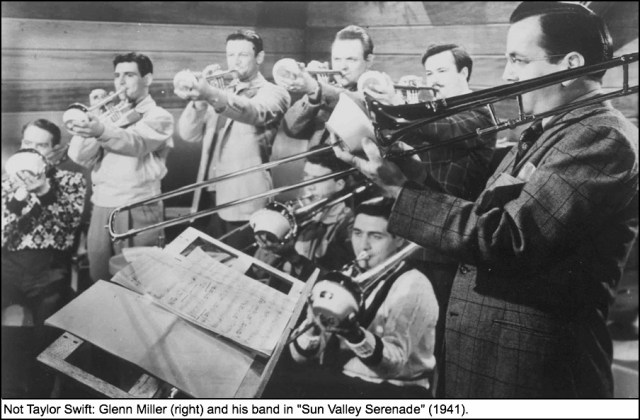
There are two kinds of people in the world: Those who think that Glenn Miller’s 1941 song “Chattanooga Choo-Chooabsolutely rocks, and those who don’t.

I think that the song absolutely rocks, which explains why I don’t know much about pop singer Taylor Swift.

By the way, the linked video of “Chattanooga Choo-Choo” is from the 1941 movie “Sun Valley Serenade.” The singers with Miller’s band are Tex Beneke and the Modernaires. Also in the video is Milton Berle,  a popular comedian of that era.

“Chattanooga Choo-Choo” became the top-rated song in America on December 7, 1941. If you went to school after 1990, that date probably means nothing to you, but it was the date of the Japanese attack on Pearl Harbor that brought America into World War II. By coincidence, Miller’s band had performed “Chattanooga Choo-Choo” the previous night on Miller’s radio program “Sunset Serenade.” That live performance was the best.

After America entered the war, Miller enlisted in the U.S. Army, which fought real Nazis instead of imaginary ones. Sadly, Miller’s plane went down over the English Channel on Christmas Eve, 1944. There were no survivors.

But back to Taylor Swift. She comes across as a pretty blonde who can carry a tune and isn’t a total head case like many of her peers. And she’s got $400 million in the bank. But she can’t seem to get a break.

First, the “woke” brigades screamed because she was staying out of politics. So she got political. Now, they scream because … well, it’s not too clear. She affirms the sacrament of abortion, she supports whatever LGBTQWERTY+ activists say they want at the moment, and she’s made the required ritual denunciations of The Devil Trump. What’s the problem now?

Apparently, Swift isn’t gay, so her recent gay-themed music video was “hijacking queerness.” And the woke suspect that her embrace of their political crusades is driven by concern for her career.

It reminds me of a scene from the Monty Python comedy film “The Life of Brian.” Brian meets an ex-leper whose illness was miraculously cured by Jesus. The leper complains that Jesus took away his livelihood as a beggar:

Brian: “There’s no pleasing some people.”

Ex-leper: “That’s just what Jesus said.”

Indeed. Taylor Swift has learned it.


Check out my book Why Sane People Believe Crazy Things: How Belief Can Help or Hurt Social Peace. Kirkus Reviews called it an “impressively nuanced analysis.”

Posted in Life, Psychology, Society | Tagged , , , , , , , , , , , , | 2 Comments

Which Values Are Most Important?

I don’t live in a bubble. I’m lucky to have friends, family members, and loved ones who disagree strongly with some of my beliefs. That gives me perspective.

Challenges to our beliefs help us in three ways:

  • They make us ask why other people believe the things that they do.
  • They make us ask why we believe the things that we do.
  • They make us work more carefully to find out what the the truth really is.

The latest challenge is over a cancelled visit to Israel by two far-left Democratic politicians. Israel’s government banned them from entering the country because they support the BDS movement that seeks to destroy the Jewish state. Israeli law explicitly allows such bans.

The politicians — Rep. Ilhan Omar (D-MN) and Rashida Tlaib (D-MI) — have made numerous anti-Semitic statements. Omar notoriously opined that American support for Israel is “all about the Benjamins (money)” and that Israel “hypnotized the world.” Tlaib opposes Israel’s existence and has accused American Jews of “dual loyalty” that puts Israel over the United States. That accusation is ironic since President Trump criticized Jewish Democrats for disloyalty to Israel by their support of Tlaib’s anti-Semitism. In any event, the Democratic Duo clearly meant their visit to generate propaganda against Israel. Hardly anyone disputes the facts involved.

In spite of that, thoughtful people disagree about the ban. Some see it as mere common sense: no country has a duty to allow entry by those who only want to cause trouble. As Ari Hoffman wrote in The Forward:

“It was the right call. Omar and Tlaib were visiting Israel to do it harm. Their visit was not one of critical engagement, and like the disastrous episode of the spies in the Hebrew Bible, they came not to strategize towards a better future but to wound.”

I agree with Hoffman. Other people see the ban as wrong on principle, and unjustifiably limiting freedom of expression. For example, last night one of my brothers said he wanted a t-shirt to proclaim himself a “disloyal Jew,” alluding to President Trump’s comment.

Both sides made rational arguments, but there’s also an irrelevant argument lurking in the background. Let’s get it out of the way.

Most opponents of the ban hate American President Trump and Israeli Prime Minister Netanyahu. Supporters of the ban probably feel the opposite way. To argue that a policy is bad because you hate people who support it, or good because you like people who support it, is obviously invalid.

Emotion often biases our judgment, but it has nothing to do with the merits of our beliefs. Let’s try to focus the merits.

Focusing on the merits doesn’t get us very far, but it does help explain the disagreement. Psychologist Jonathan Haidt argues that we make moral judgments based on five factors:

  • Care
  • Fairness
  • Loyalty
  • Authority
  • Sanctity

As shown in the graph at the beginning of this blog post, liberals base moral judgments mainly on concerns of caring and fairness. They reject the importance of loyalty, authority, and sanctity. Conversely, conservatives weight all five factors at about the same level.

Thus, left-leaning people tend to oppose the ban because they think it’s unfair. They might grant that loyalty is an issue, but they don’t think it’s important. Conversely, right-leaning people tend to support the ban because they prioritize loyalty and respect for authority. They might grant that fairness is an issue, but they think that the other factors outweigh it.

Who’s right?

There’s no way for either side to prove its case. As a result, there is no single “right answer.”

The best answer is to let each country decide for itself.


Check out my book Why Sane People Believe Crazy Things: How Belief Can Help or Hurt Social Peace. Kirkus Reviews called it an “impressively nuanced analysis.”

Posted in Judaism, Philosophy, Political Science, Psychology | Tagged , , , , , , , , | Leave a comment