Everyone’s Welfare Counts

We should try to achieve the greatest good for the greatest number of people.

It sounds like a pretty good idea.

And it is. But it’s not the whole answer.

The problem is that like lower animals, humans distinguish between their own group and other groups. They value members of their own group more than they value members of other groups. In extreme cases, they completely deny the value of people who belong to other groups.

As a result, “the greatest good for the greatest number” leads to two more questions:

  • Which people count?
  • Are some actions wrong even if they produce the greatest good for the greatest number (of the people who count)?

Equality — but only in moderation

Many people believe that the welfare of some human groups doesn’t count at all. When put into action, that kind of thinking can lead to murder, war, and attempted genocide.

On the other hand, valuing everyone equally means valuing no one specially.

And if you don’t consider your family’s welfare more important than the welfare of any random person on the planet, then pardon me, but I think there’s something wrong with you.

Everyone deserves (1) equal treatment under the law, (2) basic courtesy, and (3) at least some consideration of his or her welfare. As long as you don’t violate those requirements, you can treat people as unequally as seems reasonable.

The greatest good for the greatest number isn’t everything

Sometimes, societies can achieve the greatest good by unjustly harming individuals or groups.

Most people think that’s wrong, though most societies seem to try it. Even if hanging an innocent man or expelling a falsely-accused student might do some good, it’s still wrong.

It all comes down to choice

Most moral issues can be argued forever. The question that each of us must answer in the here and now is:

What kind of person do I choose to be?

Do I choose to be the kind of person who treats people unjustly to gain some advantage?

And do I want my society to follow that principle?

Or do I choose to be a better person than that, and try to make my society better as well?

The answers are up to you. Du bist dran.


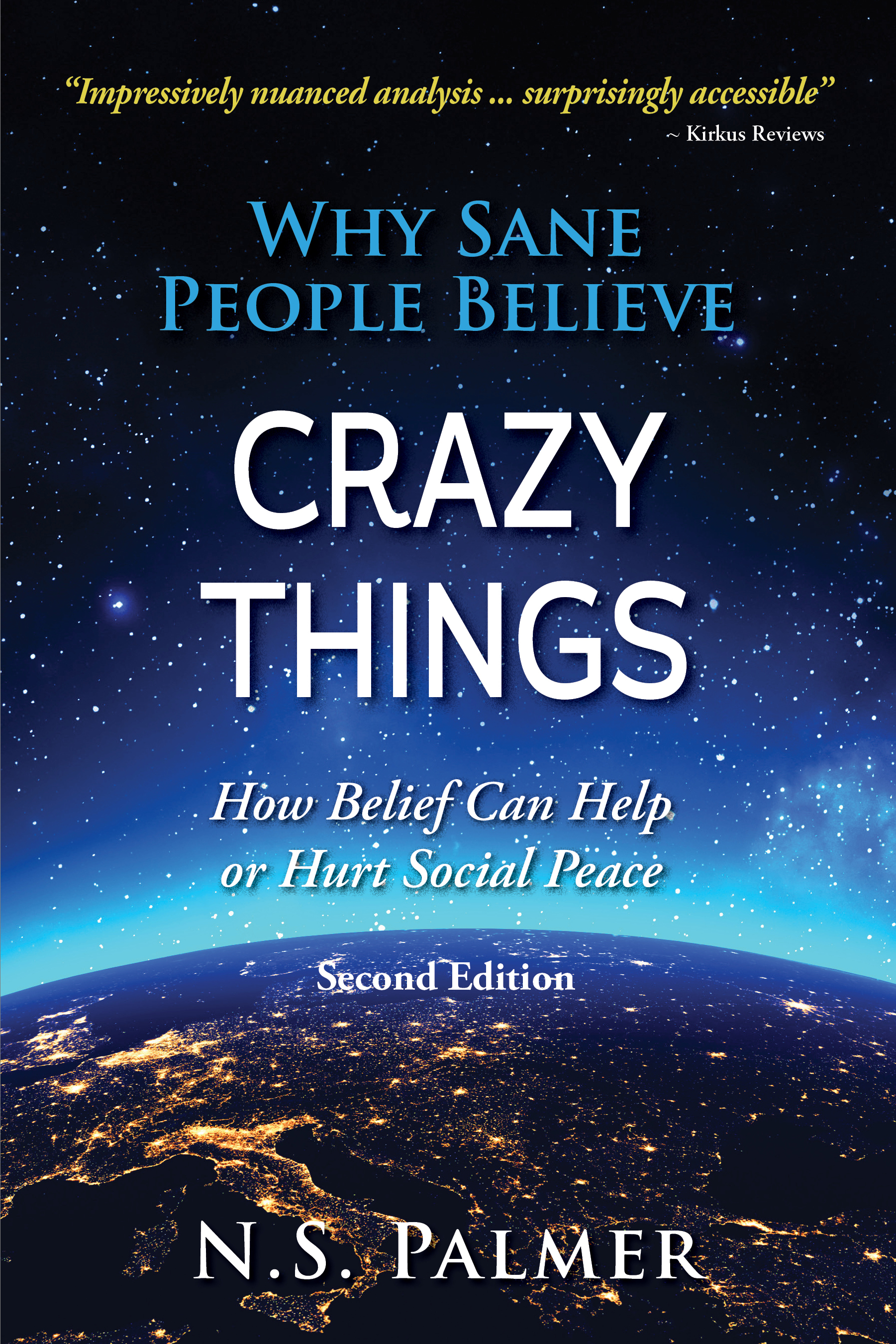
Check out my new book Why Sane People Believe Crazy Things: How Belief Can Help or Hurt Social Peace. One reader said that “This one book could easily absorb an entire year of teaching at college.”
Posted in Judaism, Philosophy, Political Science, Psychology | Tagged , , , , , , , , | Leave a comment

The Trouble with Politics

Americans disagree about a lot. But there’s one point on which we are unanimous:

Our politicians are awful.

Let’s be honest: Except in the haze of partisan fervor, can anyone truly believe that Donald Trump and Hillary Clinton were the two best people to run for president in 2016?

How about Mitch McConnell and Chuck Schumer as leaders in the Senate? Paul Ryan and Nancy Pelosi in the House?

Give credit where credit is due: There are no dummies on those lists.

But if you want character, ethics, or dedication to the public good, forget it. They never heard of those things.

And it’s not just politicians. Our political discourse is equally awful:

“A tale told by an idiot, full of sound and fury, signifying nothing.”

Politicians and politics are awful for several reasons:

  • People who go into politics for idealistic reasons aren’t interested in power. People who get power are usually the ones who want it and who will do whatever it takes to get it.
  • The people who get power become the leaders. The idealists end up taking orders from the amoral power-seekers.
  • Humans are primates, and primate societies are hierarchical. They have a few leaders and a lot of followers.
  • Most people are followers, not leaders. They take their cues from people in power: how to act, what to believe, and whom to hate.
  • Politicians are expert at manipulating masses of people, who hate each other on cue and who believe at least three impossible things before breakfast.

That’s a description of the problem. There’s no perfect solution, but a few things can help:

  • Think. Propaganda uses images, narratives, and memes to bypass your intelligence and hook your emotions. Don’t let it.
  • Ask. What’s the evidence? Is it trustworthy? Does the story make sense?
  • Listen. Talk to people who disagree with you, and listen objectively to their arguments.
  • Remember. What’s really important for individuals and society? Don’t let memes and manipulation make you forget the things that make life possible.

Check out my new book Why Sane People Believe Crazy Things: How Belief Can Help or Hurt Social Peace. Kirkus Reviews said that it’s an “impressively nuanced analysis … surprisingly accessible.”

Posted in Political Science, Psychology, Society | Tagged , , , , , , | 2 Comments

Oh Say, Kin You See?

Football player Colin Kaepernick refused to stand during the American national anthem.

And people on all sides of the political spectrum went nuts. Why?

The most obvious reason is that they either endorse or dispute his complaint:

“I am not going to stand up to show pride in a country that oppresses black people,” he said.

But there’s a deeper cause at work. It also inflames anger about other issues. If we understand it, we might be able to cool down the anger and promote social peace.

Evolution and kin selection

Animals tend to help, trust, and cooperate with other members of their species whom they see as their genetic relatives: i.e., their “kin.” Conversely, they tend to fight or flee non-relatives, who are their genetic competitors for food, resources, and mates.

Their relatives share many of their genes. By helping relatives and thwarting competitors, they get more of their own genes into future generations. That’s one of the driving mechanisms of evolution. It’s called “kin selection.”

But how can animals decide who their relatives are? They use four main cues:

  • Appearance,
  • Behavior,
  • Location, and
  • Familiarity.

Humans unconsciously use the same cues as lower animals. But we also have language, thought, and more complex social structures. Those produce changes in our appearance and behavior, affecting how we dress, how we talk, and what beliefs we profess.

We add those human cues to the biological cues we share with lower animals. We interpret all of the cues to mean that other people are our genetic relatives (for cooperation) or competitors (for hostility).

From kinship to nationality

Our small groups of genetic relatives eventually grow into large tribes or nations. Those groups are united not only by genetic kinship, but by beliefs and symbols. The beliefs and symbols hook our kin selection instincts to trust and cooperate with others who are members of our group.

Conversely, denial or disrespect toward our group’s important beliefs and symbols has the opposite effect. It hooks our kin selection instincts to perceive the deniers as genetic competitors to whom we should be hostile.

By refusing to stand for the national anthem, Kaepernick denied the validity of American symbols and the goodness of American society. To his critics, that marks him as a genetic competitor toward whom they should be hostile. His supporters react in the opposite way, perceiving him as their kin and his critics as their competitors. Both are reacting emotionally at an impulsive level, no matter who is right or wrong about America.

The same applies to many other beliefs and group memberships. They put us on “automatic pilot” toward hatreds and conflicts that we could avoid if we were thinking straight instead of letting our impulses control us.

So when we’re tempted to make blanket judgments about people or groups, we should pause for a minute. We should ask ourselves why we’re so quick to see them as enemies — and if there’s a way we can all work together peacefully.


Check out my new book Why Sane People Believe Crazy Things: How Belief Can Help or Hurt Social Peace. Foreword Reviews called it “well-reasoned and thoughtful.”

Posted in Human Relations, Political Science, Psychology, Society | Tagged , , , , , , , , | Leave a comment

Can Truth and Niceness Coexist?

Suppose that Joe believes he’s a parakeet. Is that okay?

It depends.

If Joe goes to work, obeys the law, fulfills his responsibilities, and doesn’t drive people nuts by making bird noises, then I’d say it’s okay. The belief makes him happy. It doesn’t hurt anyone else. We should leave Joe alone.

However, if Joe eats only seeds, can’t hold a job, ignores his family, and tries to fly off the roof of his house, then it’s not okay. The belief harms both Joe and other people. Joe needs to spend some time in a rubber room.

Some people would argue that it’s not nice to contradict Joe when he says he’s a parakeet. And maybe they’re right.

But it’s even less nice to let Joe harm himself or others. At some point, factual truth has to take priority. The nice thing to do for mentally ill people is to treat them, not humor them.

In order to believe that delusions exist, you have to believe that reality is real, that certain things are true, and that other things are false. Such common sense is unfashionable but is no less correct for being so.

If anything can be anything, then Joe’s belief that he’s a parakeet is just as valid as everyone else’s belief that he isn’t.

The real test is practical. Almost everyone holds at least some crazy beliefs. Each of us is the star of his or her own little drama, with all the people around us as supporting actors. We all think we’re uniquely interesting and important. In some ways it might even be true, but that’s not the point. If the beliefs are helpful to us and cause no significant harm to us or to other people, then they’re all right.

That said, it’s still better if people don’t believe they’re parakeets. It’s not true. Even if it’s nice.


Check out my new book, Why Sane People Believe Crazy Things: How Belief Can Help or Hurt Social Peace. One reader said that the book “has taken a difficult topic and broken it down using non-technical language and everyday examples.”

Posted in Human Relations, Philosophy, Psychology | Tagged , , , , | 6 Comments

What If We Can’t Agree?

What if we just can’t agree about some issues?

Suppose that we’ve had calm, rational conversations with people on the other side of the dispute. It does happen occasionally.

And suppose that each side understands the other. People on each side believe that the people on the other side are sane, well-informed, and acting in good faith. But on some issues, we still can’t reach agreement. Our differences are too fundamental.

In such a situation, we have several options:

  • We can separate. Each side goes it alone, bidding a fond (or not so fond) farewell to the other.
  • We can compromise. Each side gets something it wants, but neither side gets everything it wants.
  • We can agree on a process for deciding such issues, and then abide by the results of the process.
  • We can fight until all the people on one side surrender or are killed. The winning side gets its way, unless both sides destroy each other. Then nobody wins.

Except for the last option, the options aren’t mutually exclusive. We can combine them. For example, suppose that half the population strongly supports policy X, while the other half thinks that X is horribly wrong.

The strong feelings make compromise difficult, but not impossible.

Both sides want to impose their views on everyone else. However, if different regions have different majority opinions about X, they could agree to handle issue X and similar issues separately. California might be pro-X, Utah anti-X, and Missouri somewhere in the middle ground. 

In its own neighborhood, each side could enforce its beliefs about X. Anyone who didn’t like it would be free to move. Neither side would get total victory, but both would get partial victory — and without a shot fired. The bitter X dispute would be resolved.

From each side’s viewpoint, it would be less than satisfactory. But compared to the practical alternatives, it might be the best we can do.

And even if the best we can do isn’t perfect, it’s still not nothing.


Check out my new book Why Sane People Believe Crazy Things: How Belief Can Help or Hurt Social Peace. One reader said “I got a kick out of the chapter on Spinoza. It’s quite a feat how the book bridges the gap between the ancients and the moderns.”

Posted in Human Relations, Political Science, Society | Tagged , , , , | Leave a comment

Achievable Good Is Better Than Impossible Perfect

You’ve probably heard the joke about why a ham sandwich is better than eternal happiness:

  • Nothing is better than eternal happiness.
  • And a ham sandwich is better than nothing.

A ham sandwich isn’t perfect, but it’s better than having no food at all.

Do you want to live in a perfect society? Find a perfect spouse? Have a perfect job?

You can’t. They don’t exist, at least not on earth.

If you insist on “perfection or nothing,” then you’ll probably end up with nothing. Not even a ham sandwich.

The worst problem with “perfect” goals isn’t that they’re unattainable. It’s that they lead us to reject good but imperfect goals that we can actually achieve.

Human societies are imperfect because human beings are imperfect. That’s not going to change.

Attempts to create a perfect society usually cause more of the evils they’re trying to eliminate, such as the terror and mass slaughter of the French, Russian, and Chinese revolutions.

No matter how good a society is, it will have things that some people dislike. Some things will be real problems that should be fixed. Others will be minor problems or subjective judgments that should be left alone. There are always costs and benefits.

The French philosopher Voltaire said it well:

“The perfect is the enemy of the good.”


Check out my new book Why Sane People Believe Crazy Things: How Belief Can Help or Hurt Social Peace. BlueInk called it “a multidisciplinary analysis for the communication breakdown in these divisive times.”

Posted in Philosophy, Political Science, Society | Tagged , , , , , , | Leave a comment

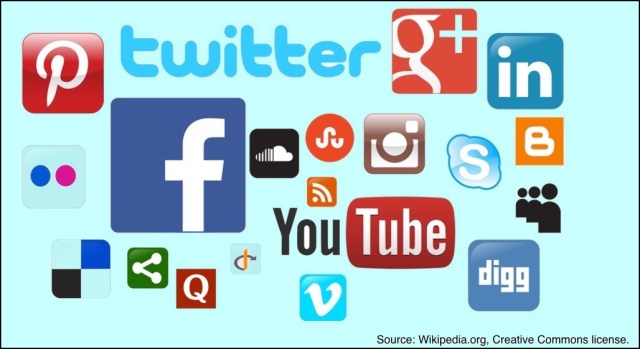
Detoxifying Social Media

Social media started as an enjoyable way to chat with people who shared our interests.

But it soon developed a dark side. It started to generate hostility and hysteria.

Crazed mobs started to harass and threaten people who made social media comments they didn’t like. Well-funded political operations used social media to misinform and mobilize armies of dupes. Social media encouraged users to hate people they’d never met, about whom they knew nothing, over subjects of which they were completely ignorant.

The problem isn’t partisan or ideological. It hurts everyone. What can we do about it?

Three Causes

It seems to me that the problem has three main causes:

  • All of us sometimes get angry or frustrated: We blow off steam by talking to our friends. Sometimes, we say outrageous things. Prior to the advent of social media, that was the end of it. The only people who knew about our outrageous comments were a few of our friends. But on social media, we’re sitting at our computers in home or office. We feel like we’re in private, so we talk like we’re in private. But we’re really talking to all of the two billion social media users on planet earth. Unlike our friends, many of those people won’t forgive our angry comments. They’ll get angry, too. At us. Sometimes, they’ll decide to do something about it.
  • Our attitudes about social media are inconsistent: Almost everyone knows that 90 percent of social media comments shouldn’t be taken seriously. In spite of that, almost everyone does take them seriously. “Did you hear what Trump tweeted? Did you see what Rosie O’Donnell replied? And there’s a Facebook page that says terrible things!” Far too much indigestion and anger are caused by things that don’t matter at all.
  • Our news media tend to hype outrageous statements: Outrage gets the news media clicks and viewers. Therefore, they have an incentive to stir up as much outrage as they can. In this case, Adam Smith’s “invisible hand” works against social welfare, not for it.

Three Imperfect Solutions

I can think of three solutions that aren’t perfect but that might make things better:

  • Reminder messages: When people start to post a comment, social media should display a reminder that they’re talking to the entire world: “Is this something you’d say in front of a room full of strangers?” If it isn’t, people can cancel the comment.
  • What happens in Vegas stays in Vegas: Government and social media companies should promote “amnesty” for most social media comments. They should not be taken seriously in real life. Of course, such comments are different from targeted campaigns of harassment, some of which have even driven people to suicide.
  • A news media summit: The federal government should convene a summit of news media to agree on guidelines for news coverage that provides information without inflaming hatred. The government should only convene the summit, not direct it. If all the media cover the news more responsibly, then none of them will have an “outrage advantage” over the others. The summit and agreement should be public. The agreement should be vetted to avoid running afoul of antitrust laws.

Check out my new book Why Sane People Believe Crazy Things: How Belief Can Help or Hurt Social Peace. Kirkus Reviews called it “a thoughtful consideration of torrid intellectual disputes.”

Posted in Human Relations, Philosophy, Political Science, Society | Tagged , , , , , | 2 Comments

Respect the Other Person

When you disagree with someone, how can you keep the argument focused on the issues?

You don’t want to get sidetracked, and you especially don’t want the discussion to turn into a screaming match.

The previous blog post (“How to Argue Productively”) explained how to manage the logical side of an argument.

This blog post explains how to manage the psychological side of an argument.

People aren’t robots. They have emotions. They need to feel safe and respected. They often identify their beliefs with themselves. If you attack their beliefs, they sometimes feel as if you’re attacking them. When that happens, they stop thinking about the subject of the argument and start thinking about “defending themselves.”

Here are some tips:

  • Start off by reviewing the points on which you both agree.
  • Keep the focus on the issues under discussion.
  • Keep the focus away from the people in the discussion.
  • In general, avoid making statements about the person with whom you’re arguing. Be  careful about any statement that starts with the word “you.”
  • When you agree with the other person’s arguments, clearly express your agreement. You can even praise an argument if the praise is sincere.
  • If it’s appropriate and won’t make you seem like a psycho, smile.
  • At the end of the discussion, sum up what you think are the conclusions. Ask the other person if he or she thinks you’ve given an accurate summary.

The American writer Dale Carnegie gave some wonderful advice in his famous book How to Win Friends and Influence People:

A man convinced against his will, Is of the same opinion still.


Check out my new book, Why Sane People Believe Crazy Things: How Belief Can Help or Hurt Social Peace. Foreword Reviews said it’s “intriguing and vital.”

Posted in Human Relations, Philosophy, Political Science, Society | Tagged , , , , , | Leave a comment

How to Argue Productively

Most arguments aren’t productive. But argument can be productive if you do it right.

The First Rule

The first rule of productive argument is the same as in many other areas: Define your goals.

Do you want to discover the truth, understand the other person, or just win a competition?

This blog post applies only to the first two goals: discovering the truth and understanding the other person.

The Second Rule

The second rule of productive argument is obvious but usually ignored: Get a clear idea of what you’re arguing about.

Many arguments end up bitter and unresolved because of ignoring the second rule. People yell at each other for hours without making any progress because none of them know what they’re trying to prove or disprove.

At the very beginning, you should identify the points where you and the other person agree. At the same time, identify as clearly as possible the points where you disagree.

Focus your attention on the specific points where you disagree. If there’s more than one point, take them one at a time. Trying to do them all at once will just confuse things.

The Third Rule

The third rule of productive argument is: Identify the underlying points on which you disagree.

For example, suppose you disagree about whether or not “Person X is a racist.”

You might find that you disagree about:

  • What the word “racist” means.
  • What facts justify calling someone a racist.
  • What the facts are in the specific case you’re discussing.

At the end of the discussion, you might still disagree but you’ll understand why. You’ll also know what additional information might help you come closer to agreement.

As an added bonus, you will understand each other better. You will have taken a small step toward making society more rational, peaceful, and tolerant.


Check out my new book Why Sane People Believe Crazy Things: How Belief Can Help or Hurt Social Peace. Kirkus Reviews called it an “impressively nuanced analysis.”

Posted in Human Relations, Philosophy, Political Science, Society | Tagged , , , , , , , | Leave a comment

Can We See Past Our Own Foundations?

You can’t understand anything in terms of nothing.

That much is obvious. What’s less obvious is that it’s a barrier to communication and understanding.

Each of us has a foundational viewpoint that biases how we see the world. It includes things like:

  • Our basic concepts, such as time (day, hour, minute, second), animal, vegetable, and mineral.
  • Our basic assumptions about reality, such as that physical things usually stay the same from day to day.
  • Our basic assumptions about morality, such as that all people are equal or that democracy is good.

The problem is that we can’t really verify our own viewpoints.

Suppose that your viewpoint consists of 10 concepts and 10 assumptions. If they are all consistent with each other, how can you think critically about any of them?

If you try to evaluate assumption #1, you have to do it in terms of assumptions 2 to 10. You can collect additional evidence, but your interpretation of the evidence will still be shaped by assumptions 2 to 10.

Because your assumptions are consistent with each other, they and the evidence you interpret with them will probably certify that assumption #1 is correct. The same applies to any other basic assumptions.

Is there any way we can get out of our own box of assumptions and see them from the outside?

There’s only one way: Talk to people who disagree with us and listen carefully to what they say. It’s not perfect, but it’s the best method we’ve got.

In 2018, people tend to view disagreement and debate as unpleasant and unhelpful. They think we should all either agree or at least shut up about any dissenting opinions.

That’s a prescription for ignorance.

We shouldn’t just tolerate disagreement, we should welcome it. We can’t check our own assumptions, but people who disagree with us can check them for us. And we can do the same thing for them.

In order for that to work, we have to be more interested in learning the truth than in proving we’re always right. As the philosopher John Stuart Mill said, “He who knows only his own side of the case knows little of that.”


Check out my new book Why Sane People Believe Crazy Things: How Belief Can Help or Hurt Social Peace.

Posted in Epistemology, Philosophy, Political Science | Tagged , , , , | 2 Comments